
Amazon Alexa Enterprise • 2024
Designing Reliable Communication Alerts for Alexa Devices
Solo Product Designer , 2023-2024
PMs · Engineering · Solution Architects
Communication Systems Design · Design Systems · Enterprise UX
TLDR;
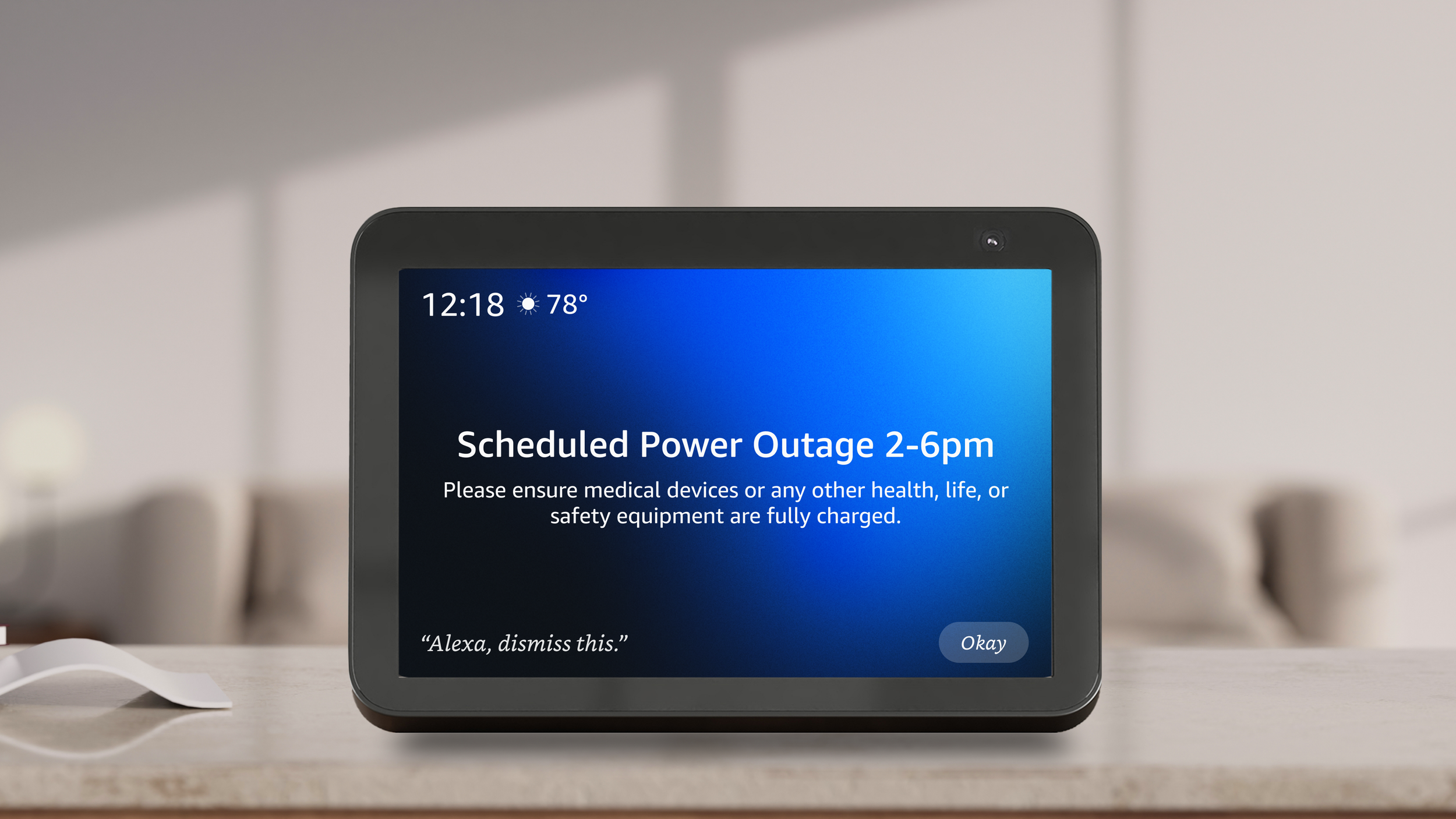
As the solo designer, I owned the end-to-end design of Persistent Visual Alerts which is a communication system that gave hotels and senior living properties a reliable way to reach guests and residents directly through in-room Alexa devices.
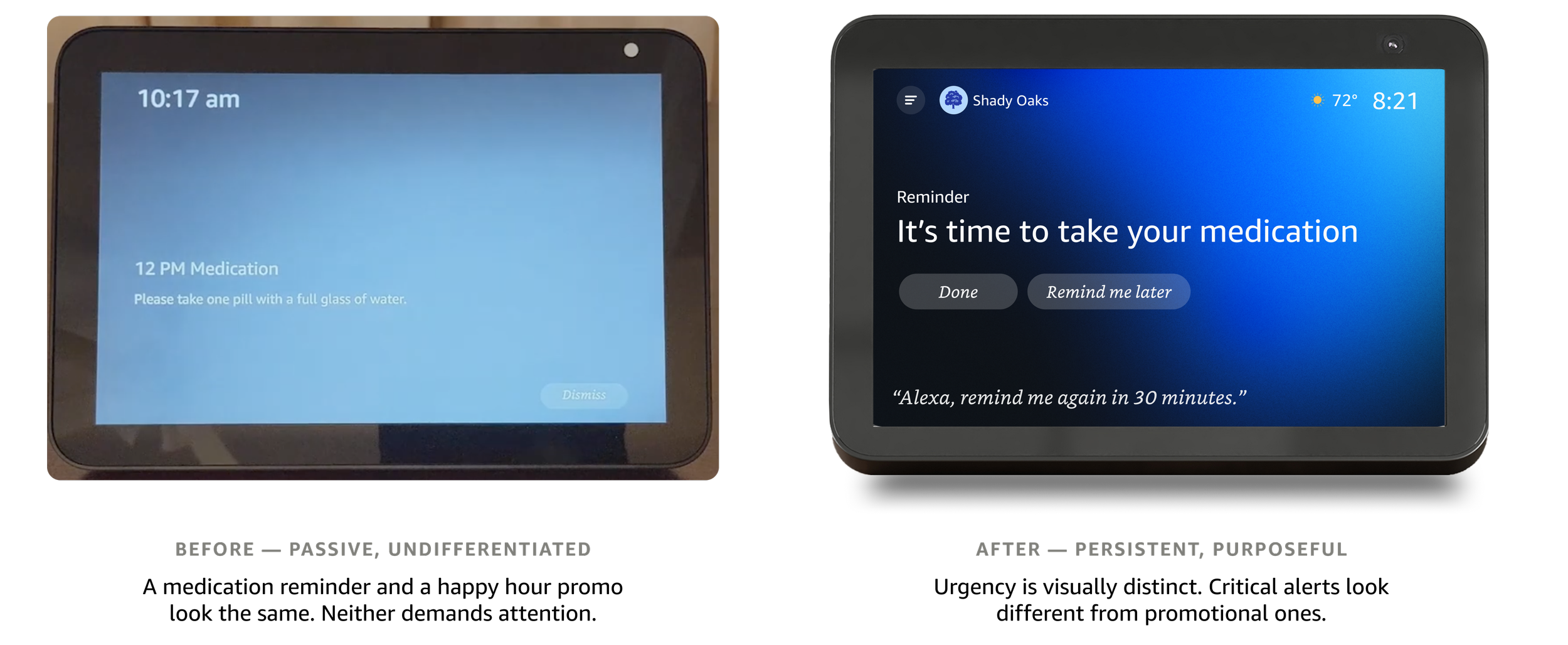
The problem: existing notification surfaces were passive, easy to miss, and impossible to customize for urgent or time-sensitive needs. A medication reminder and a happy hour promotion were being delivered the same way and neither was working well.
I designed an alert system with a three-tier urgency framework, a configurable template system for enterprise developers, and guardrails that protected end users from notification overload. The feature shipped to all Alexa Smart Properties partners across hospitality and senior living, and was adopted by three early partners.
CHALLENGE
Properties needed to reach guests and residents. The existing tools weren't built for that.
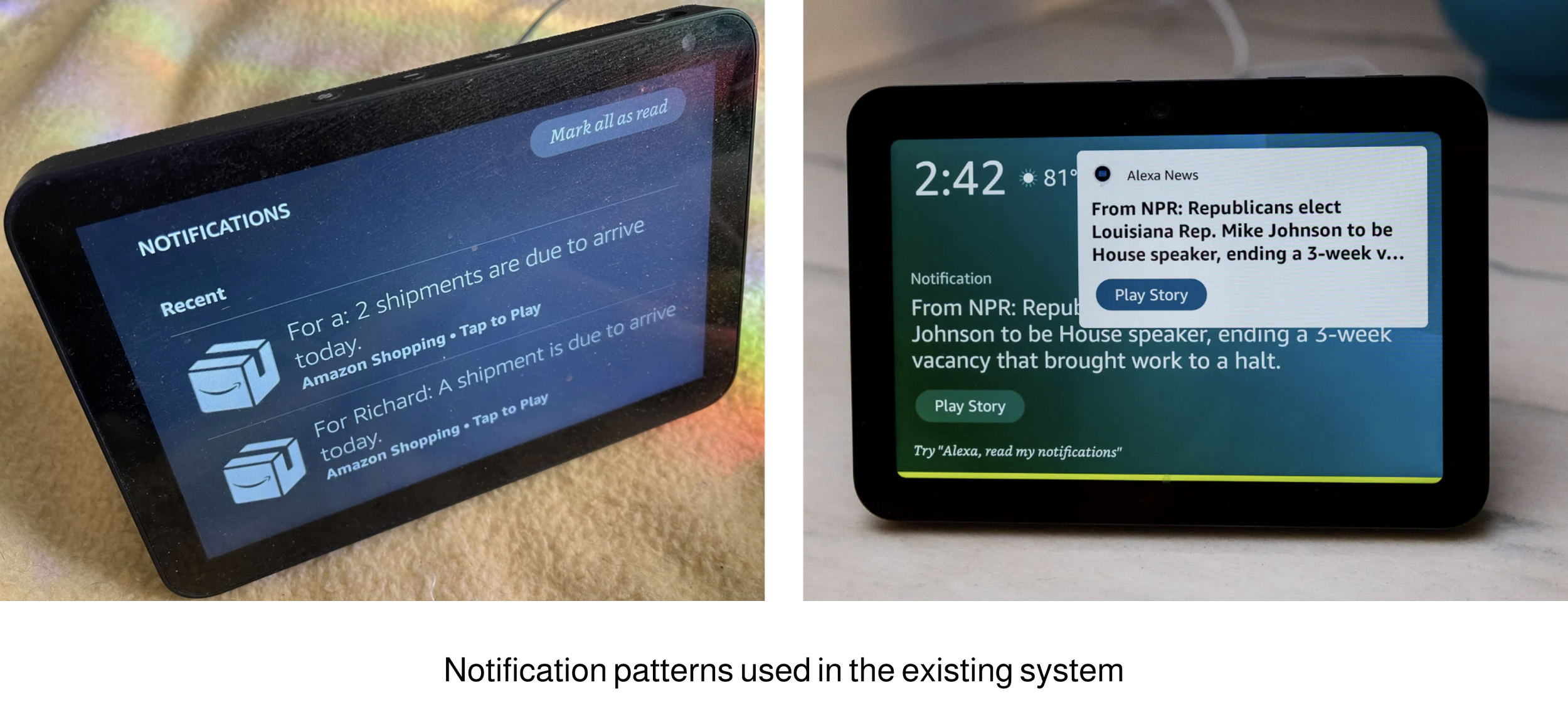
Enterprise customers deploying Alexa in senior living and hospitality had three notification options, none of which solved the core need.
Pinned cards couldn't be customized.
Bell notifications required navigating a system tray, unusable for residents with limited mobility.
Rotating cards cycled every 8 seconds which was fine for ambient discovery but completely wrong for critical alerts.
The result: staff were still making phone calls and door-to-door visits to deliver medication reminders and emergency alerts. Properties were paying for Alexa devices that couldn't do the one thing they needed most.
PARTNER FEEDBACK
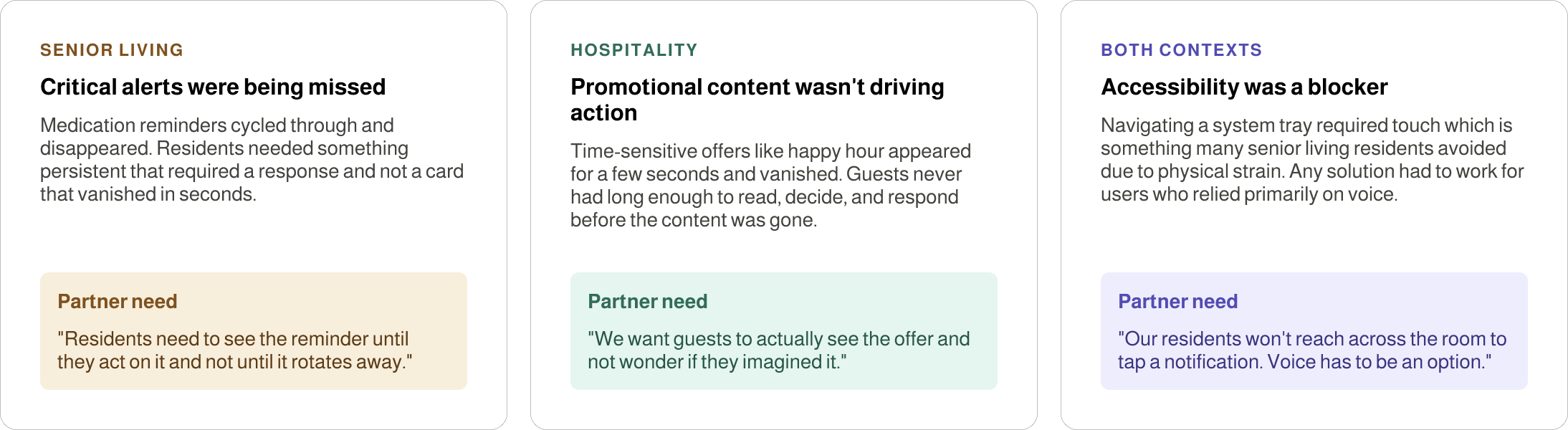
Before designing anything new, I listened to what partners were trying to do with notifications.
I started by auditing every existing notification surface, mapping each pattern against the partner use cases it was supposed to serve and where it was falling short.
STRATEGIC DECISION
I pushed back on giving partners unlimited control.
Early in the project, business development and solutions architects advocated for a fully open system letting partners configure alerts however they wanted. I pushed back. Without guardrails, nothing would stop a property from turning an Alexa device into an advertising billboard. Noise would erode trust.
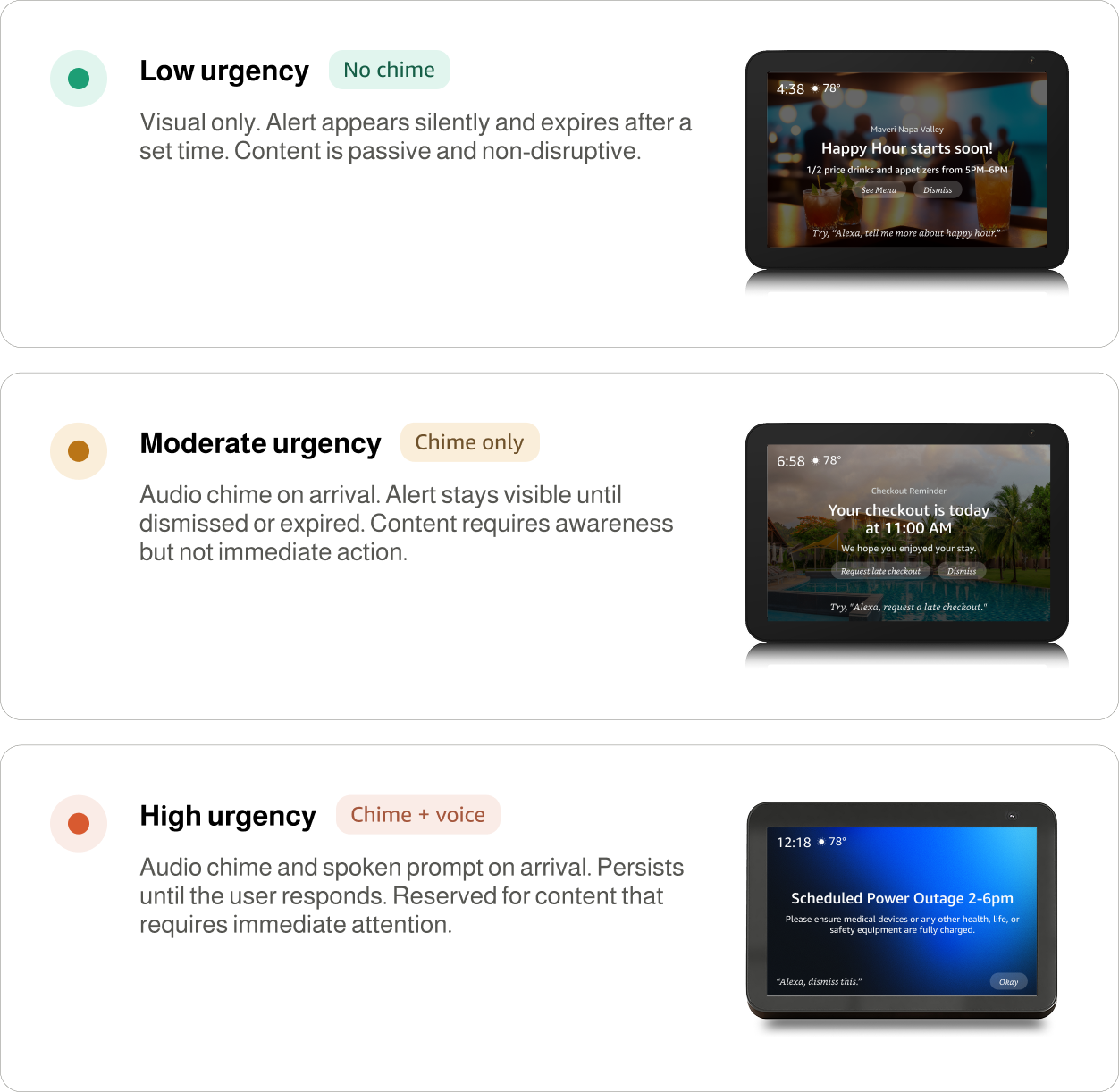
I made the case that protecting the end user's experience was protecting the business. I then defined three urgency tiers governing audio and visual behavior based on content criticality.
DESIGN PRINCIPLES
Four principles kept the system honest.
Progressive enhancement — attention has to be earned.
Least intrusive first — the right interruption is the minimum required.
Accessible by design — voice had to be a complete path, not a secondary option.
Configurable but constrained — flexibility for partners, guardrails to protect users.
I started by auditing existing templates, mapping each pattern against the partner use cases it was supposed to serve and where it was falling short.
WHAT WE BUILT
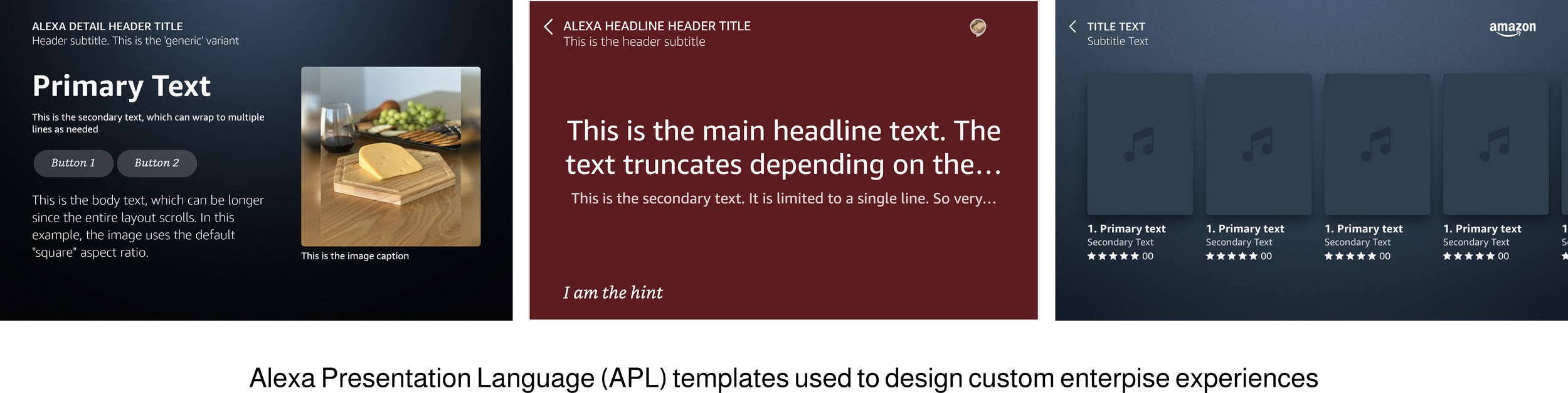
A configurable template system that gave partners control without compromising the experience.
The final system shipped with a configurable template system giving properties control over headline, body copy, image, actions, and urgency level with guardrails built in. Urgency tier determined audio behavior automatically. Every alert was fully operable by voice, no touch required.
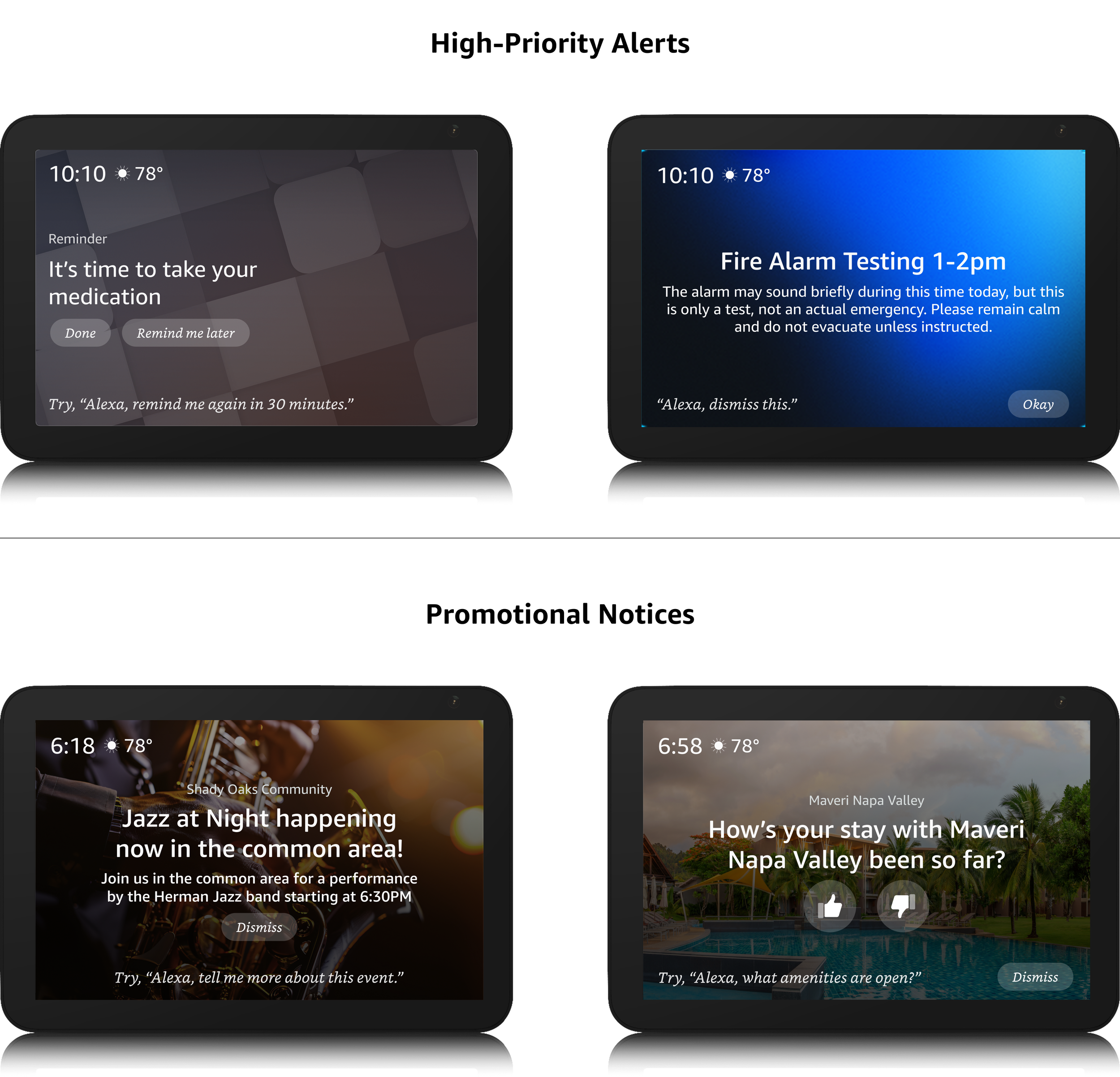
After launch, partner usage revealed an opportunity to simplify. The three-tier framework evolved into two types: alerts for critical time-sensitive information, and promotions for non-urgent content like offers and announcements. Cleaner mental model for partners, more predictable experience for users.
→ See how this evolved in the Enterprise Console case study
IMPACT
The feature shipped to all Alexa Smart Properties partners across hospitality and senior living.
Three early partners validated the framework across hospitality and senior living before broader rollout. Engagement with property updates increased meaningfully. The design guardrails became the standard across Alexa Smart Properties, the system-wide framework for how properties communicate with guests and residents on Alexa devices.
Quotes from Partners
"Senior living is mostly voice-centric, but multimodal devices have doubled our property engagement metrics. The ability to send notifications, alerts, and use a medium of communication that pushes residents to be more interactive with the device is a game changer."
— Co-founder of a Senior Living solutions provider
"Hotel guests find the devices and its capabilities intuitive. Guests are able to discover and benefit from the wide variety of in-room experiences we enable. We have seen fewer front desk calls, and the skill launches in the property have tripled."
— CEO of a Hospitality Living solutions provider
REFLECTION
Guardrails are a feature, not a constraint.
The most important design decision in this project wasn't a screen. It was the system that governed what partners could and couldn't do. Flexibility without limits would have eroded the trust the feature depended on.
The right communication tool depends on what you're communicating.
A medication reminder and a happy hour promotion should never compete for the same level of attention. Designing for urgency as a first-class property taught me that communication design is about knowing when to be loud, when to be quiet, and when to get out of the way entirely.