

A M A Z O N A L E X A E N T E R P R I S E · 2 0 2 2 - 2 0 2 4
Personalized Alexa,
Anywhere You Stay
A guest asks to play Madonna and gets Madonna not a radio station.
ROLE
Lead Product Designer — with PM, engineering, legal, and research
CRAFT
Interaction design · trust & privacy · conversational design
OUTCOMES
Launched in Japan and the EU · became the trust layer for everything personal that came after
Hotels and senior living communities had Alexa in every room, limited to a few features like asking what’s on the menu, learning about spa services, the weather and a licensed radio station. Someone who paid for a music subscription at home could not hear any of their songs from it in the room where they slept.
Personal Account Linking lets a guest or resident sign into their own Amazon account on a device the property owns, use their own music while they are there, and have the account removed from the device automatically when they leave.
I led this end to end, from the first research study through launch.
What 200 hotel guests told me before I designed anything
S T U D Y # 1
95.8%
found the QR code method easy
It matched a pattern they already knew from restaurant menus
S T R O N G E S T M O T I V A T O R
Their own entertainment
Their own music was the pull. What held people back was that the device belonged to the hotel, and they were afraid of checking out with their Amazon account still signed in on it. Scanning a QR code was easy for nearly everyone, since they knew the pattern from restaurant menus.
What they wanted in writing was that their account would come off the device on its own, whether they remembered to remove it or not.
87.5%
wanted assurance the disconnect is automatic
Control on a shared device was non-negotiable
S T R O N G E S T B A R R I E R
Forgetting to disconnect
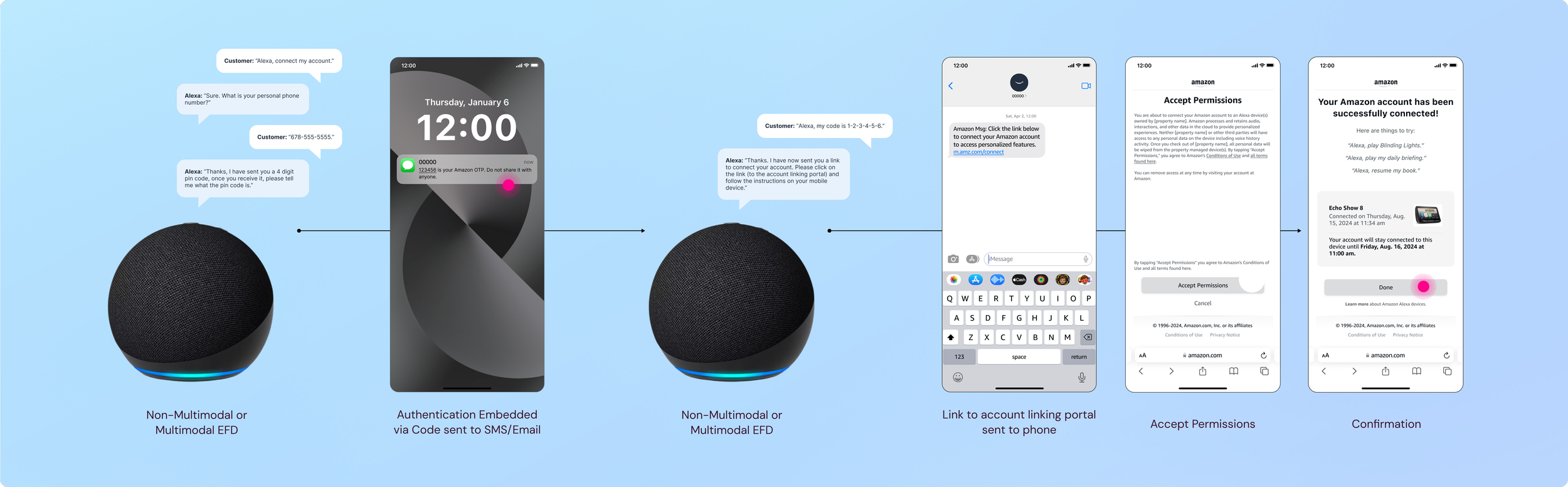
E X P L O R A T I O N : C O N N E C T I N G B Y V O I C E
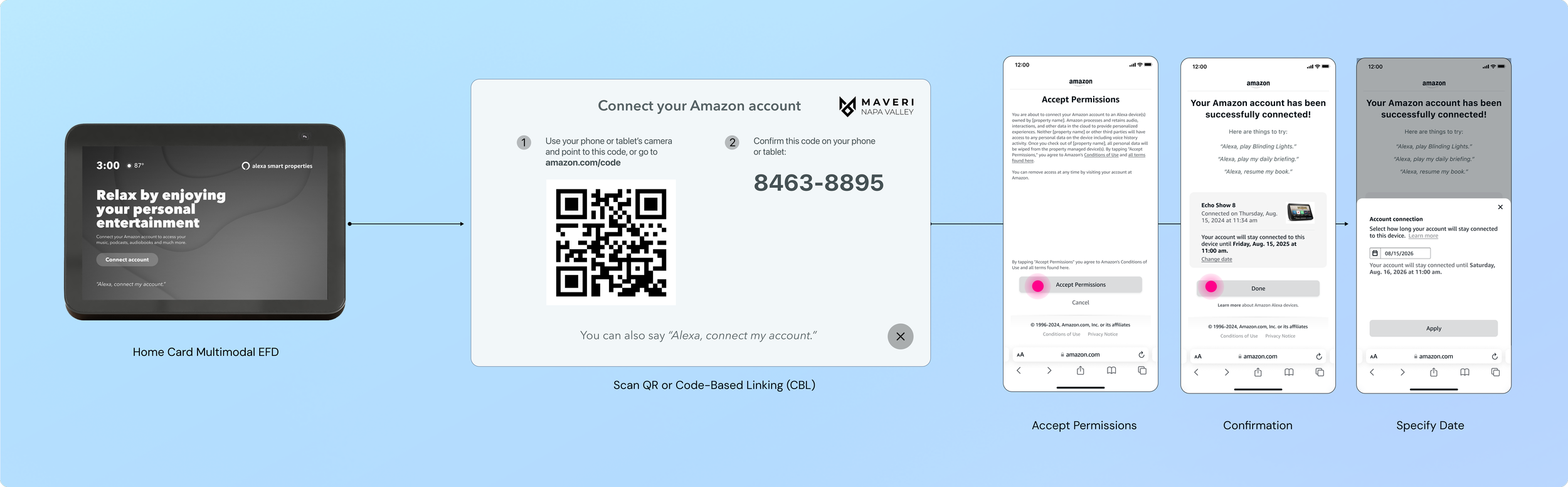
I explored connecting by voice and connecting from the screen, and tested both before picking.
R E S E A R C H : W H A T W E P U T I N F R O N T O F P E O P L E
E X P L O R A T I O N : C O N N E C T I N G F R O M T H E S C R E E N
We could have shipped many domains everything at once but we shipped music only.
Most wanted feature, least to ask of trust
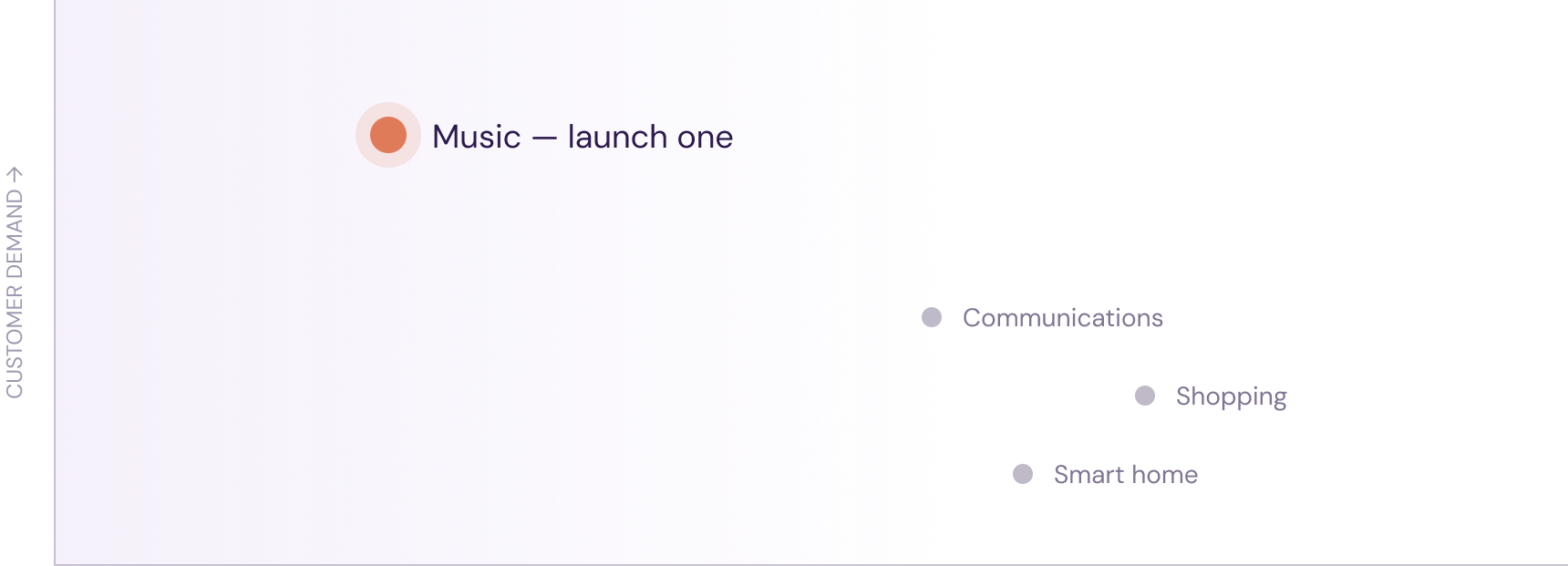
Three domains sat where demand was lower and the privacy ask was higher. Music was the only one in the corner worth launching first.
There was real appetite for launching communications, shopping, and smart home in the same release. My product partner and I pushed back. People were already uneasy about privacy on a device they didn't own, and two of those areas were mid-overhaul with open questions about data handling.
Music was what people wanted most and the smallest thing to ask them to trust us with first. The research made the case.

Everything hinged on two screens
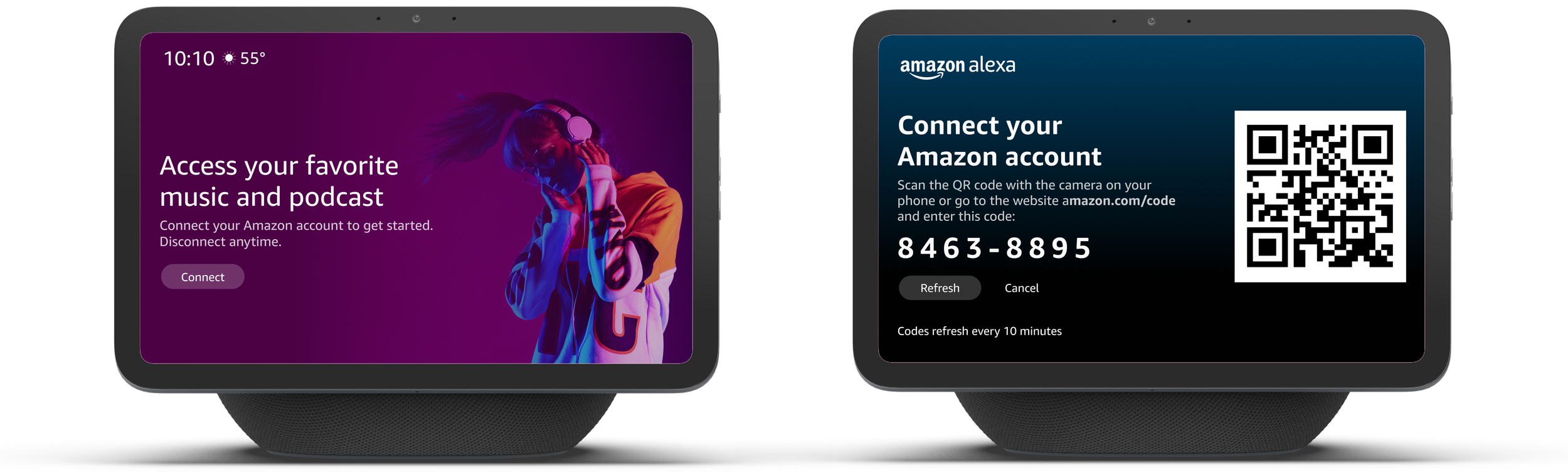
Primary Ingress: Rotating Card
-
Never buried in a policy link — said on the screen where the decision happens.
-
QR over Bluetooth pairing, over typing a URL.
-
Disconnect available from the screen, the email, and a browser.
-
Automatic by default, so nobody has to remember.
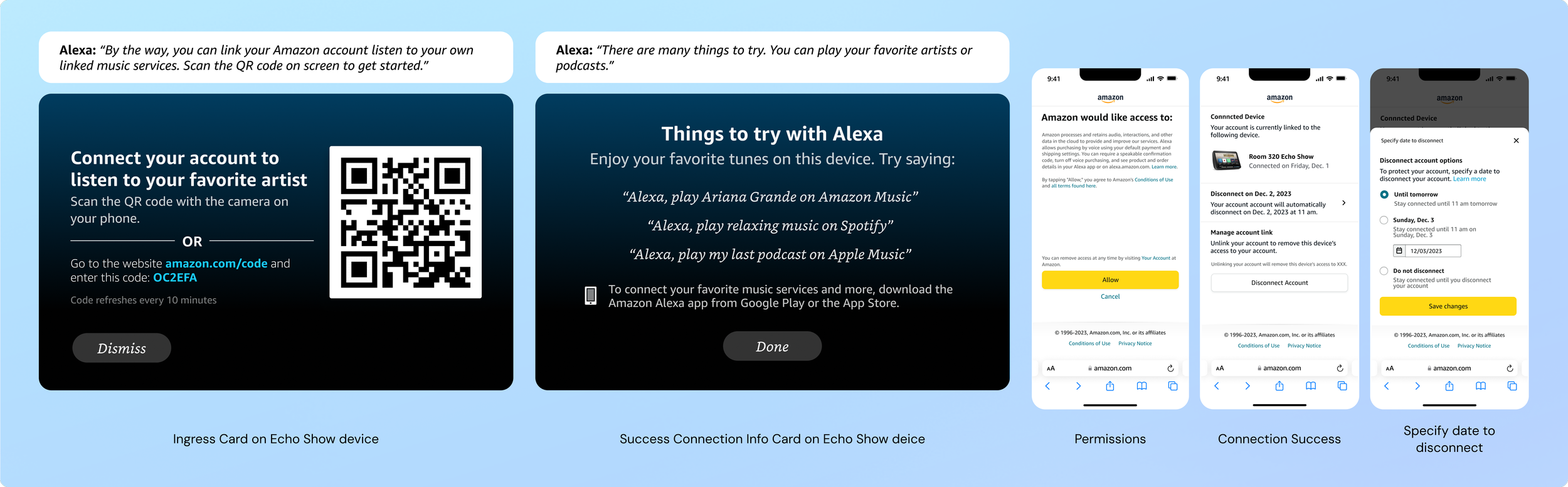
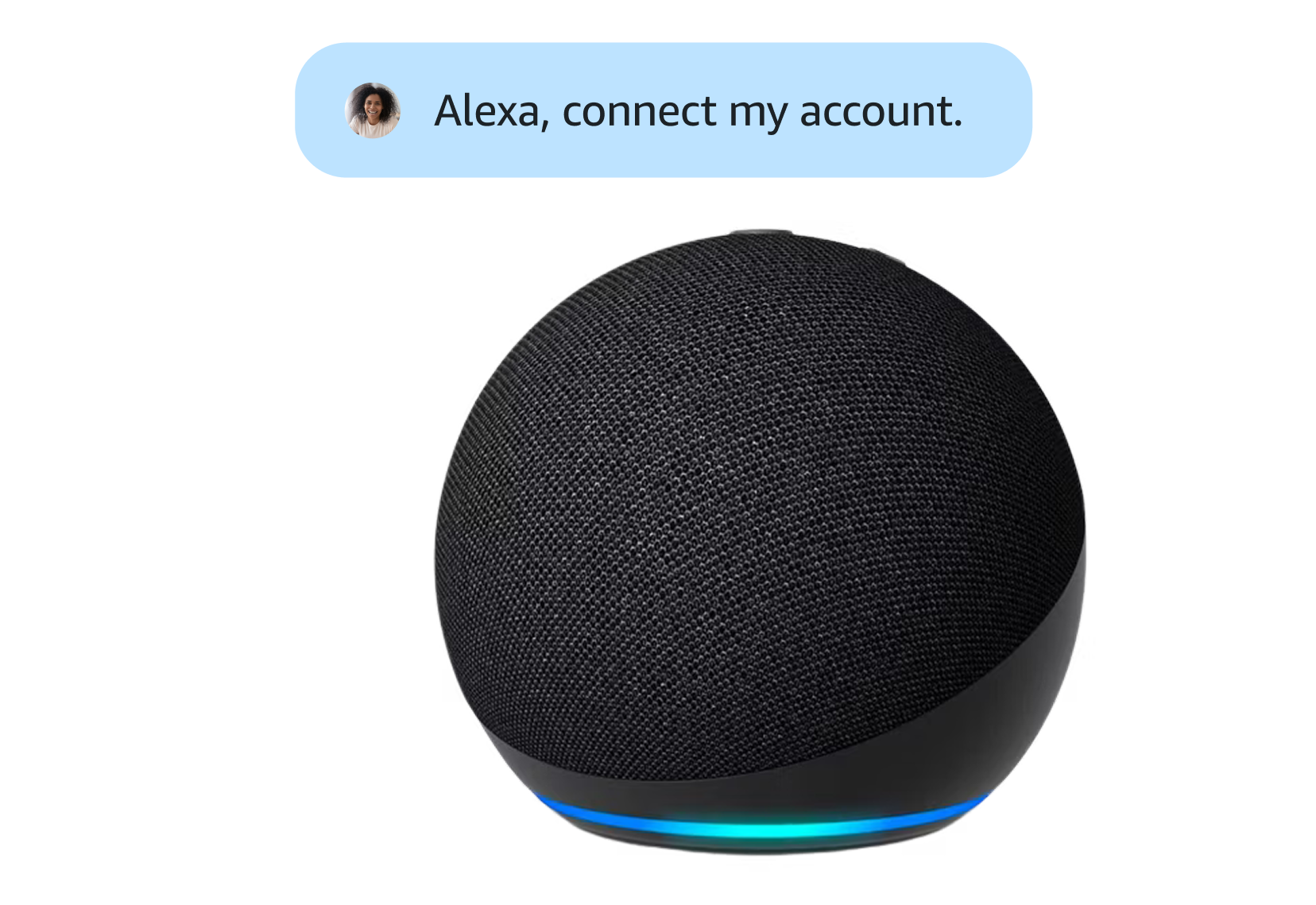
Four principles came first, and every decision got held against them. Then three ways in: a rotating card on the device, a voice prompt, and a printed poster in the room. The QR code carried most of it, with codes expiring after ten minutes so no one could pick up a half-finished session.
Secondary Ingress
Voice trigger
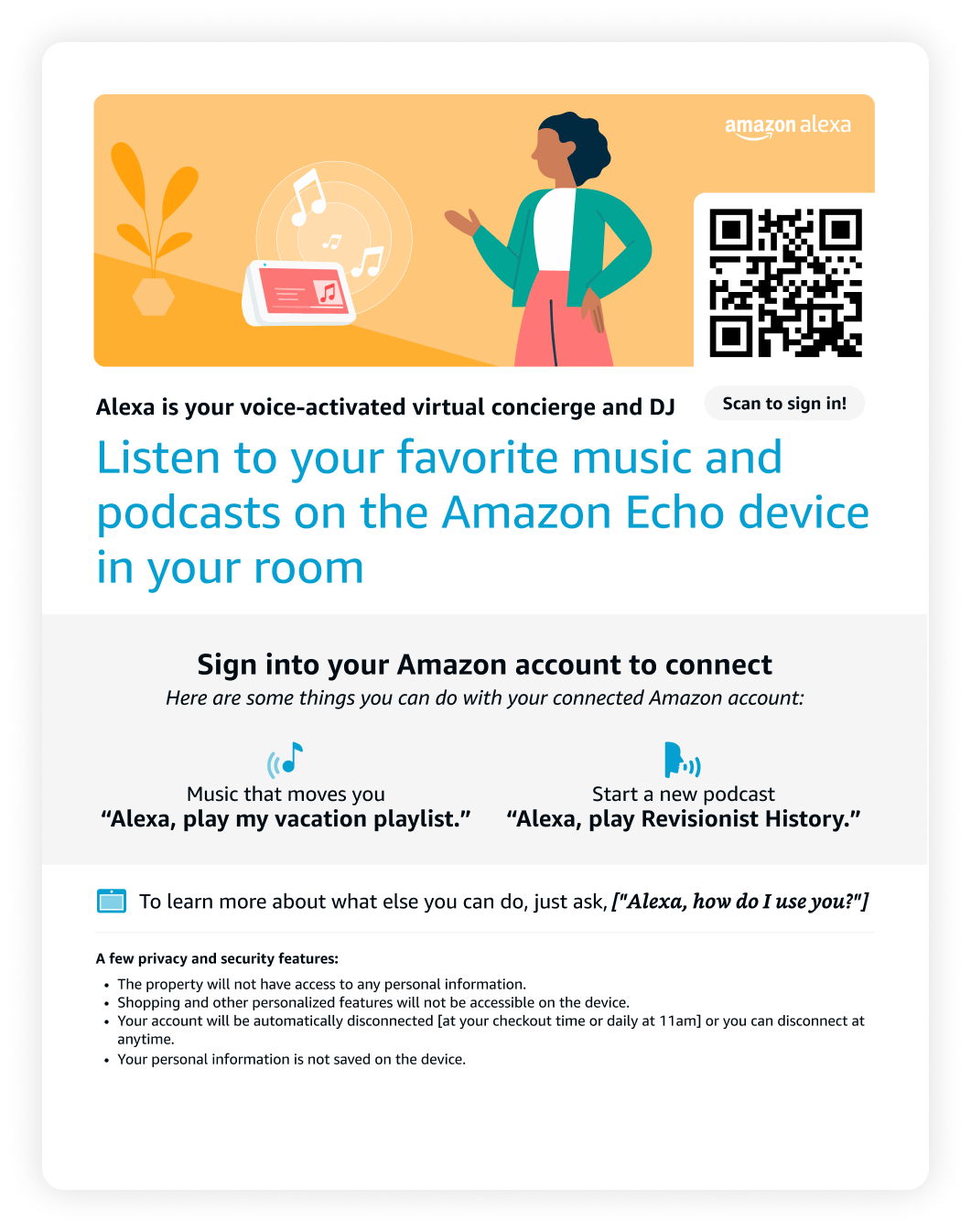
Secondary Ingress
In-Room Collateral
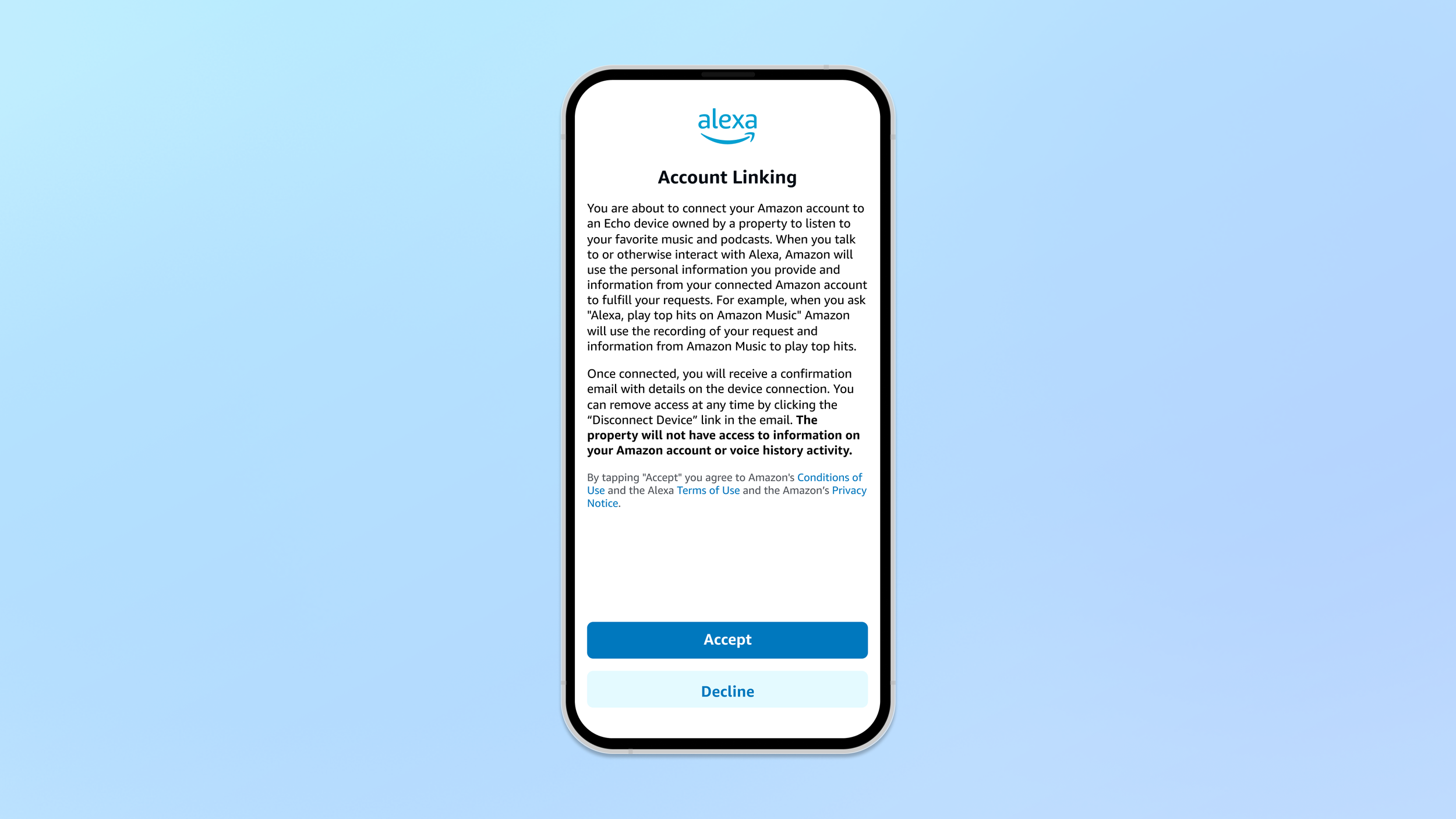
The permissions screen is where I spent the most time. I rewrote it with legal until it said plainly what gets shared, what doesn't, and that the hotel or community can't see your account or anything you've said to Alexa.
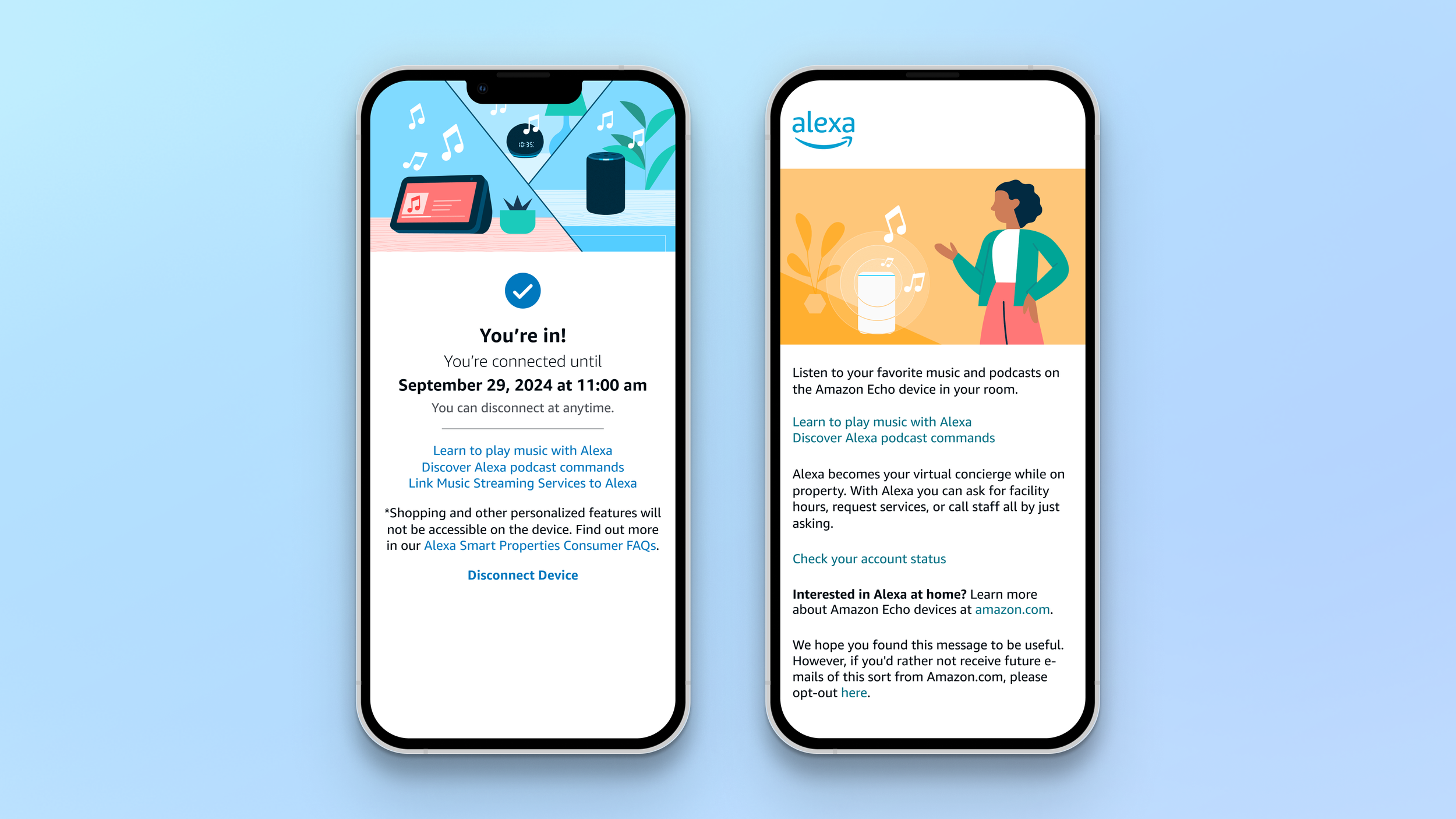
Then the success screen opens with the detail everyone was actually asking about — the exact date and time your account comes off the device.
Daily in hotels, yearly in senior living, and you can disconnect yourself from the screen, the confirmation email, or a browser.
Then you talk to the room
Linking happens on your phone. The payoff happens out loud, on a device that was never yours.
Before linking, the same request returned a licensed radio station approximating the ask. After linking, it's the actual album from the account you already pay for — and it stops being available the moment your stay ends.
Launched in Japan · EU
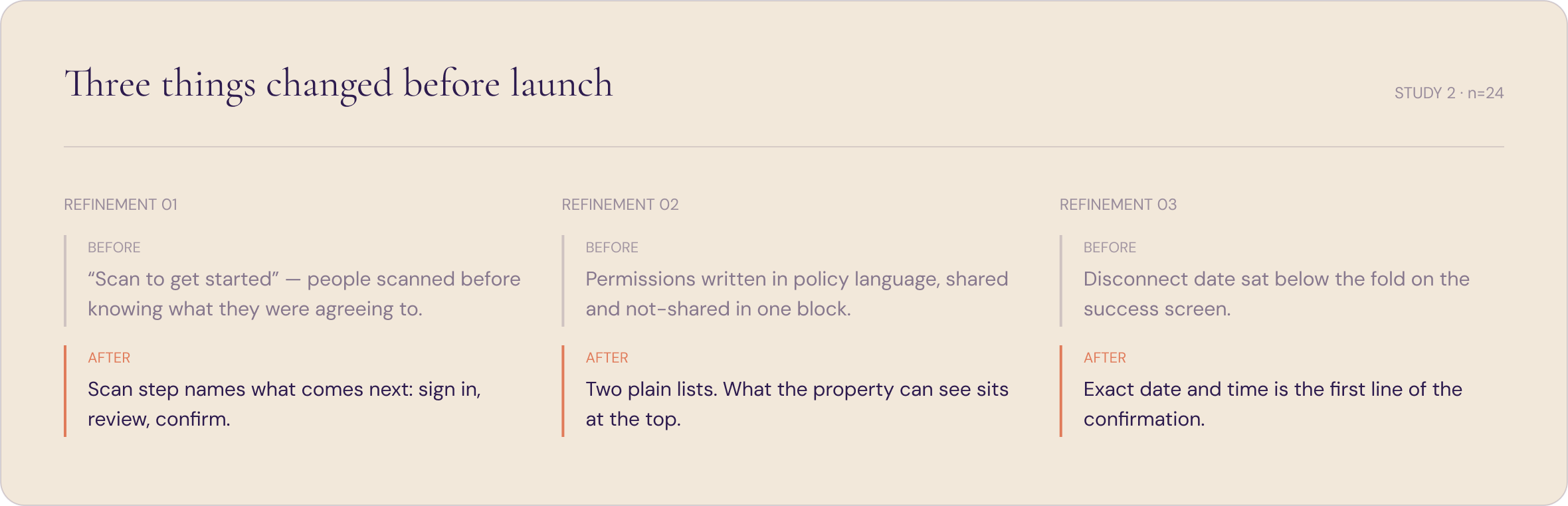
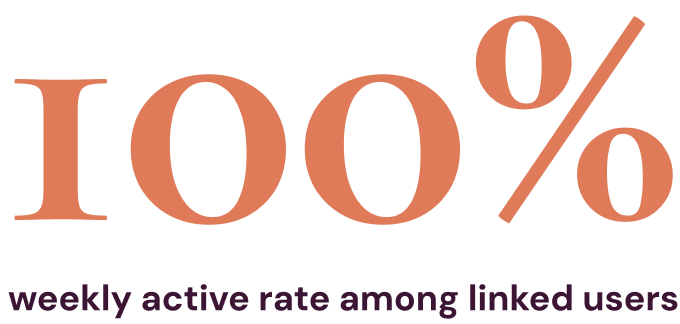
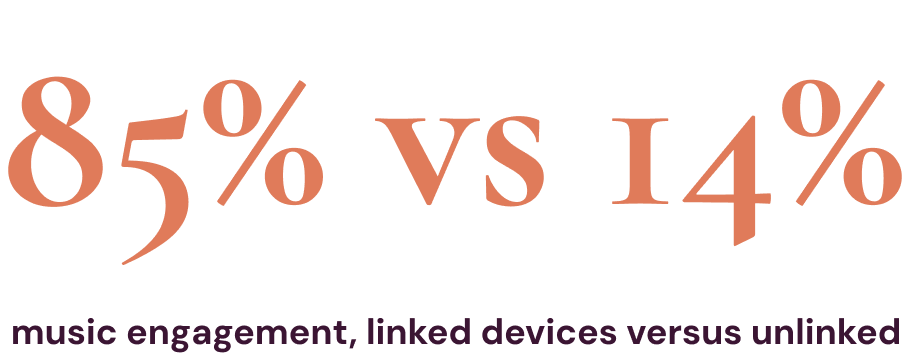
A second study with 24 people confirmed the QR was clear and that people believed the disconnect. It shipped into senior living communities in Japan and the EU, with the US and Spain following after Alexa+.
Linked devices got used daily at a rate the unlinked ones never came close to. It also ended a licensing dependency that had the team remapping configurations region by region every time a deal lapsed, and the trust layer it established is what communications, shopping, and smart home personalization are built on now.

Trust is the adoption metric.
Every place someone hesitates in a linking flow is a place they leave. The permissions rewrite with legal was slow and it produced something more honest than we'd have shipped on our own.
Disconnecting deserves as much design as connecting.
Someone who ends a stay feeling in control is someone who links again at the next property, so that moment gets the same care from me as the first tap does.