
Amazon Alexa • 2023
Reimagining Alexa Discovery on Smart TVs
Lead Product Designer , 2022 - 2023
PMs · Marketing · Engineering · BI
Interaction Design · Multimodal Design · Discovery Strategy
TLDR;
Alexa had strong distribution on Smart TVs, but user engagement told a different story.
As the lead designer, I owned the end-to-end redesign of the Alexa TV app home screen. From content strategy and discovery framework through final design and launch. The problem: despite being built into millions of Smart TVs, most users never engaged with Alexa after setup and not because they didn't want to, but because the setup experience gave them no reason to start.
I designed a modular discovery system with four new components that surfaced Alexa's value in the moments users were already in. The experience launched on Samsung TVs in November 2023 and generated 100K+ interactions within the first three weeks.
CHALLENGE
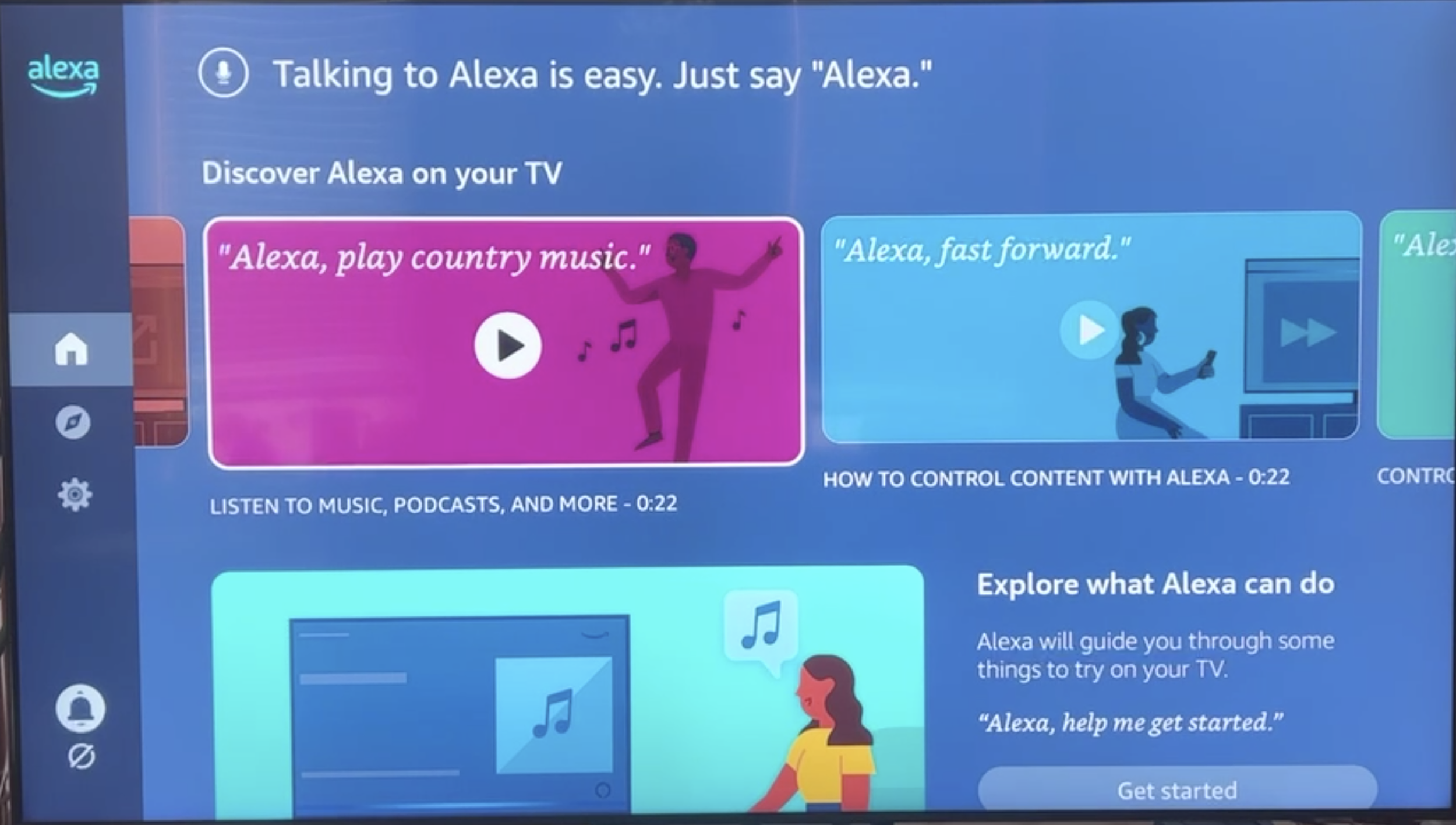
Alexa was on millions of TVs. Almost no one was using it.
Despite strong registration numbers, the post-setup experience gave users no reason to come back. No clear next step, no guidance on what to try, no context for why Alexa on TV was different from the Echo already on their shelf. Previous attempts had been made and the research team had been building evidence around why users were lapsing. What was missing was a cohesive design solution that translated those insights into a scalable system.
I came in to lead the design end-to-end from content strategy through launch.
RESEARCH & INSIGHTS
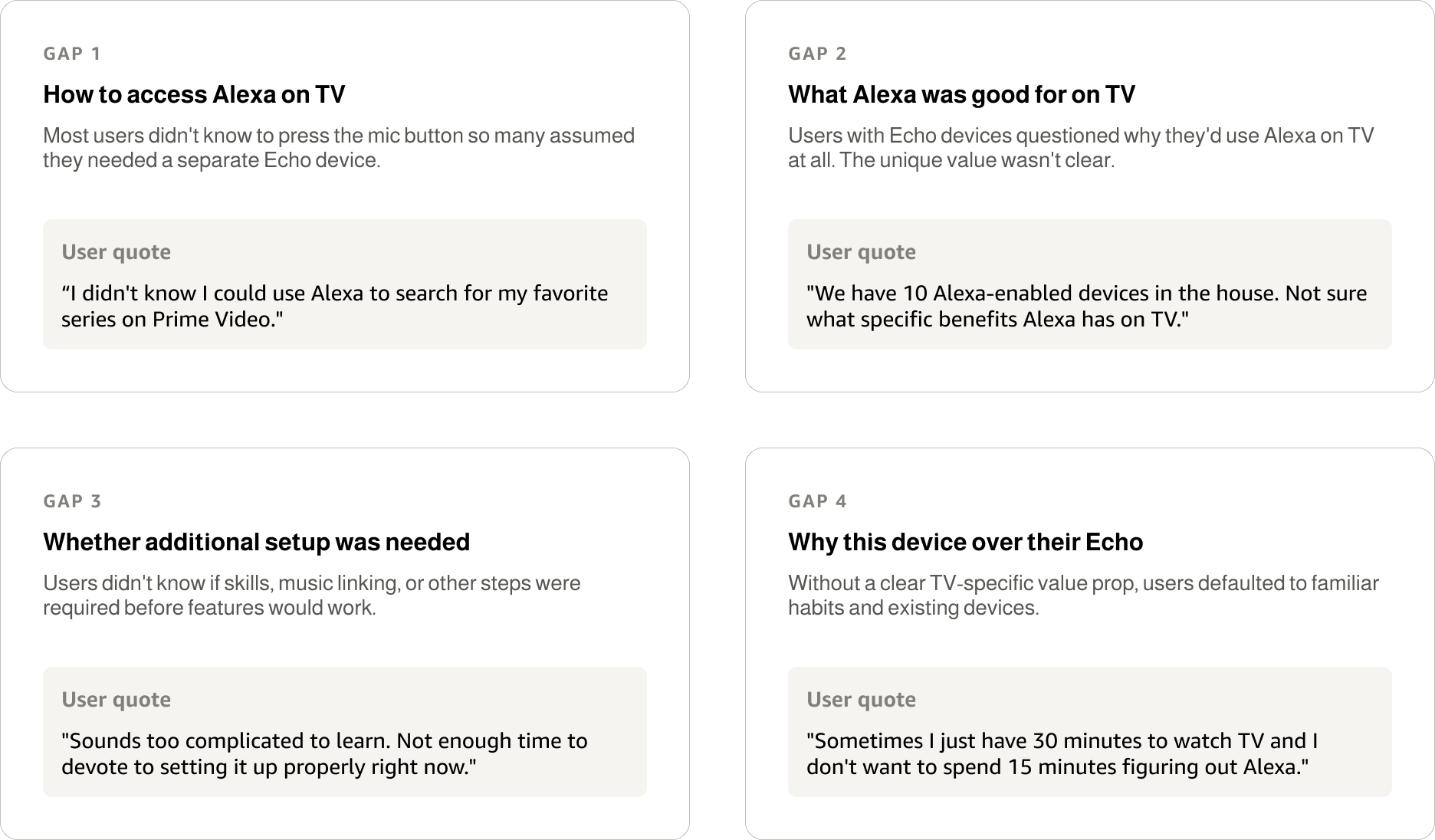
Customers weren't rejecting Alexa. They just didn't understand its unique value on TV.
I reviewed multiple rounds of existing research around lapsed user studies, never-active customer research, and partner voice of the customer (VOC) data to understand why engagement was falling off. Four specific knowledge gaps emerged consistently:
THE FRAMEWORK
The solution was a system, not a screen.
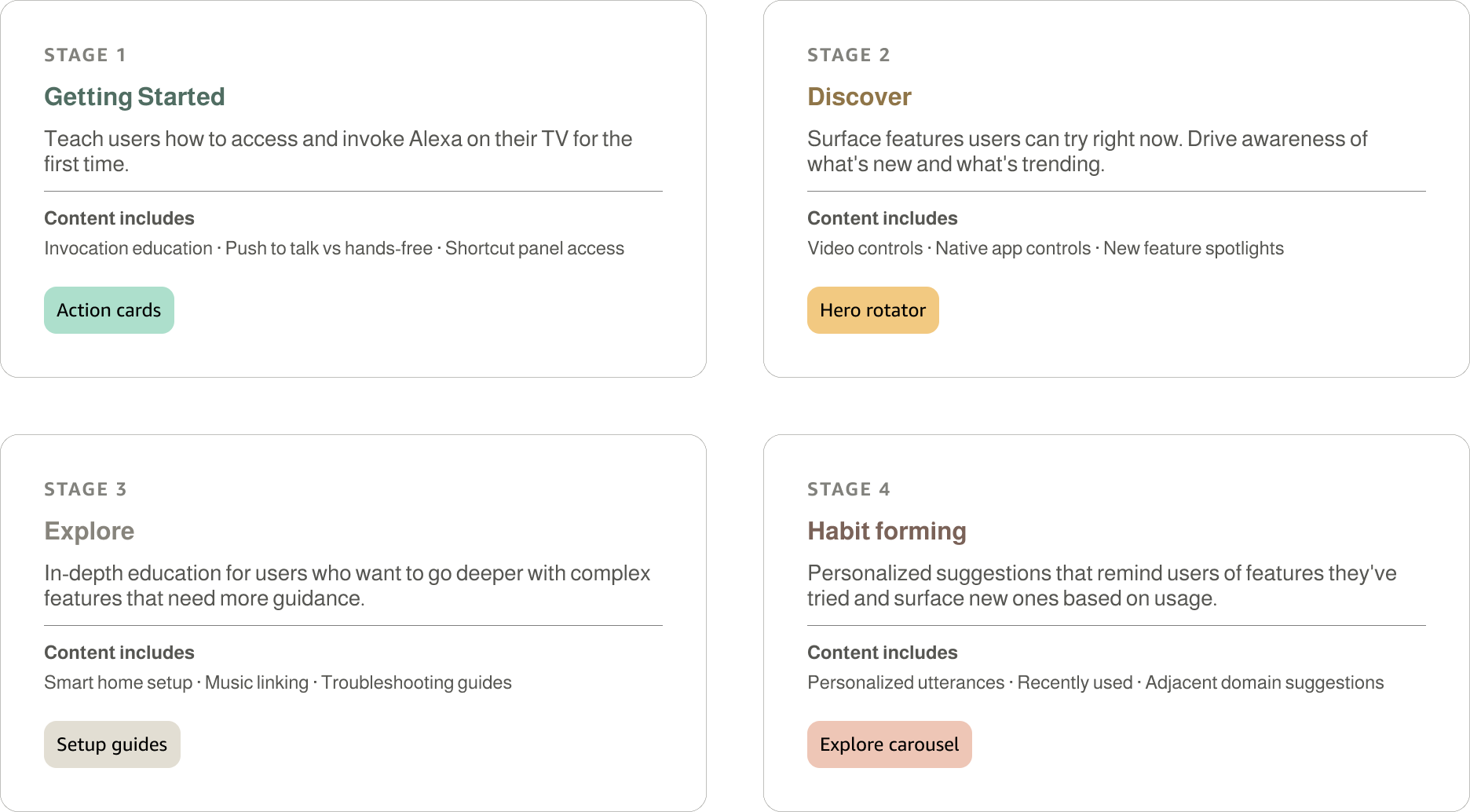
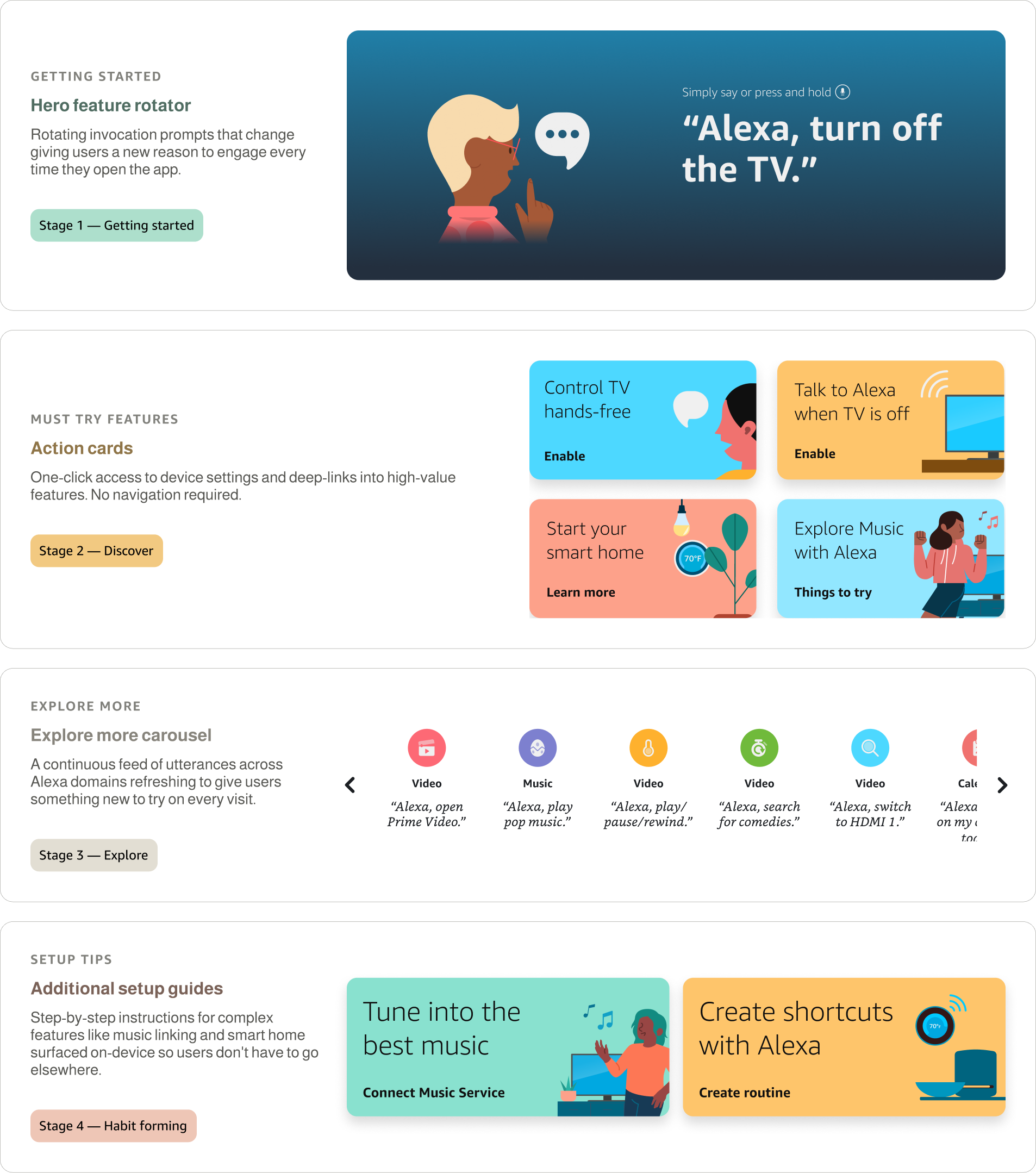
I designed a four-stage content framework:
Getting Started
Discover
Explore
Habit Forming
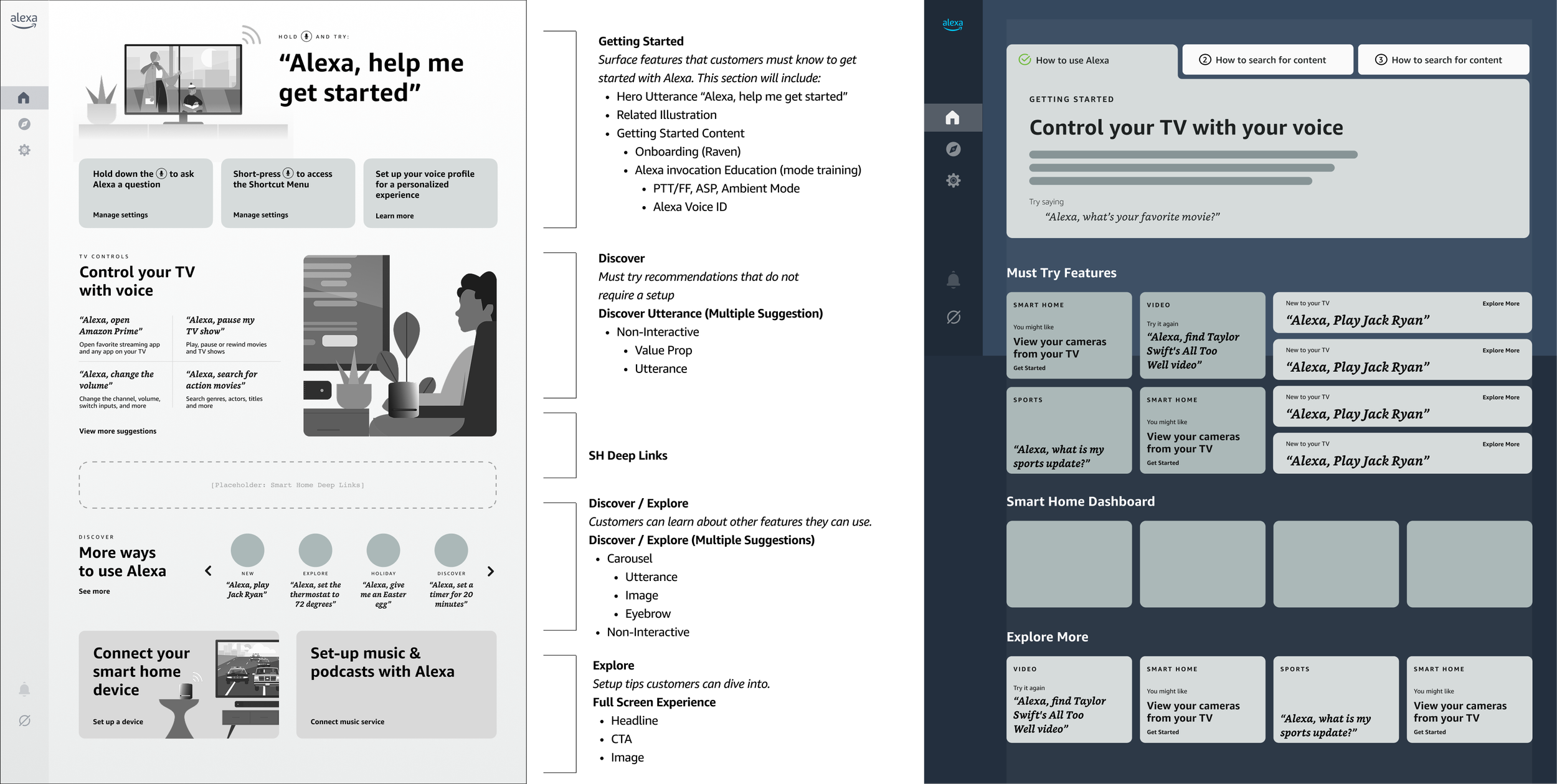
I mapped to where users were in their Alexa journey, with defined content types and placement rules across three app surfaces: home screen, shortcuts panel, and screensaver widgets. The framework gave every new feature a clear home. Teams could drop content into the right stage without redesigning the experience each time. I was designing the infrastructure, not just the screens.
PROCESS
I started with an audit before designing.
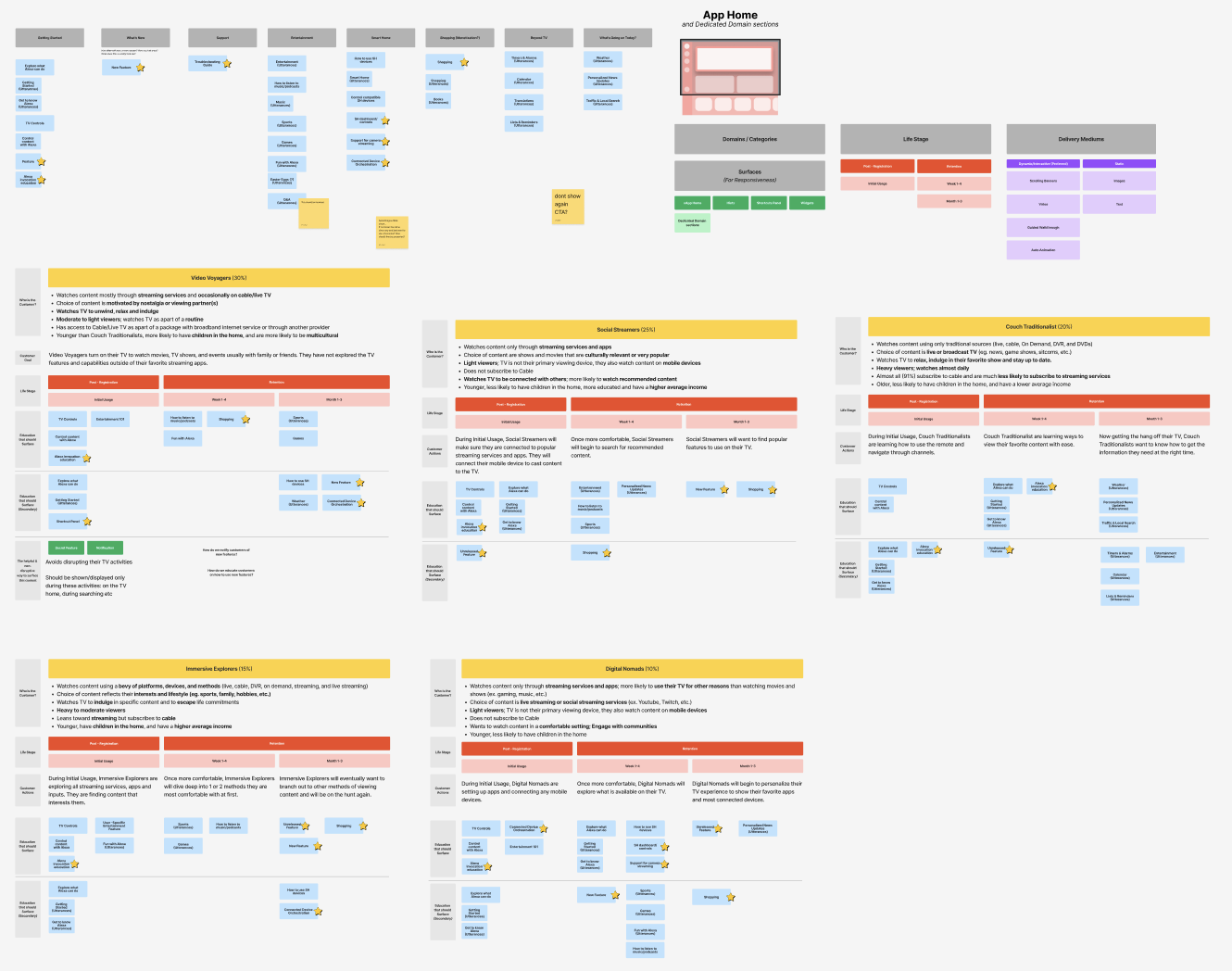
I started with a full audit of everything that existed on the current Alexa app home, mapping each piece against the customer journey to identify gaps. That audit became the foundation for the content strategy. From there I ran HMW exercises with the PM team, moved through rapid iterations from lo-fi to annotated spec, and ran design in parallel with engineering so the team could move without waiting on me.
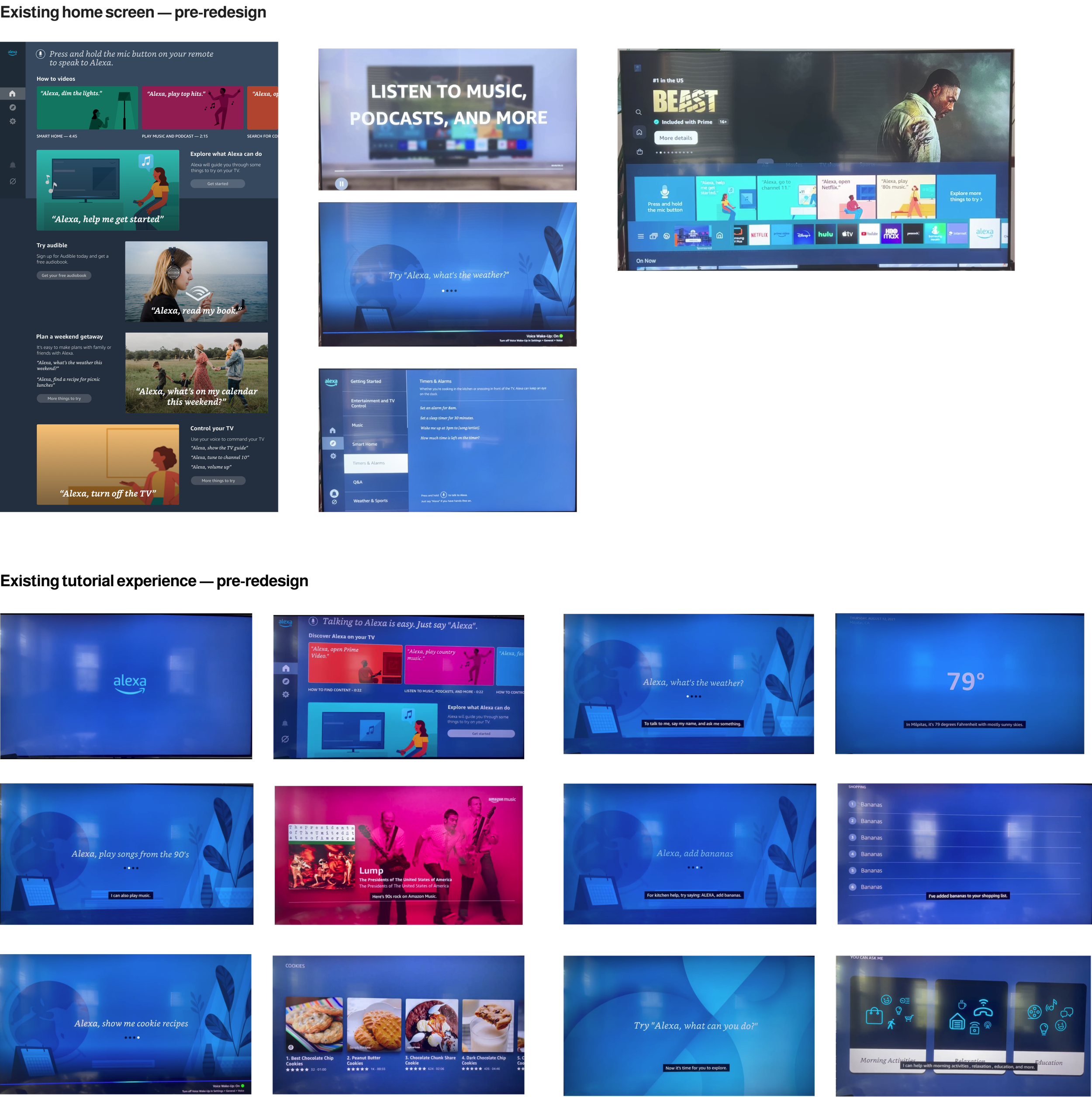
Audit What existed before, and where it was failing.
(Click image to view)
Content Strategy Mapping domains, personas, and surfaces before designing a single screen.
Wireframes From framework to designed system
FINAL SOLUTION
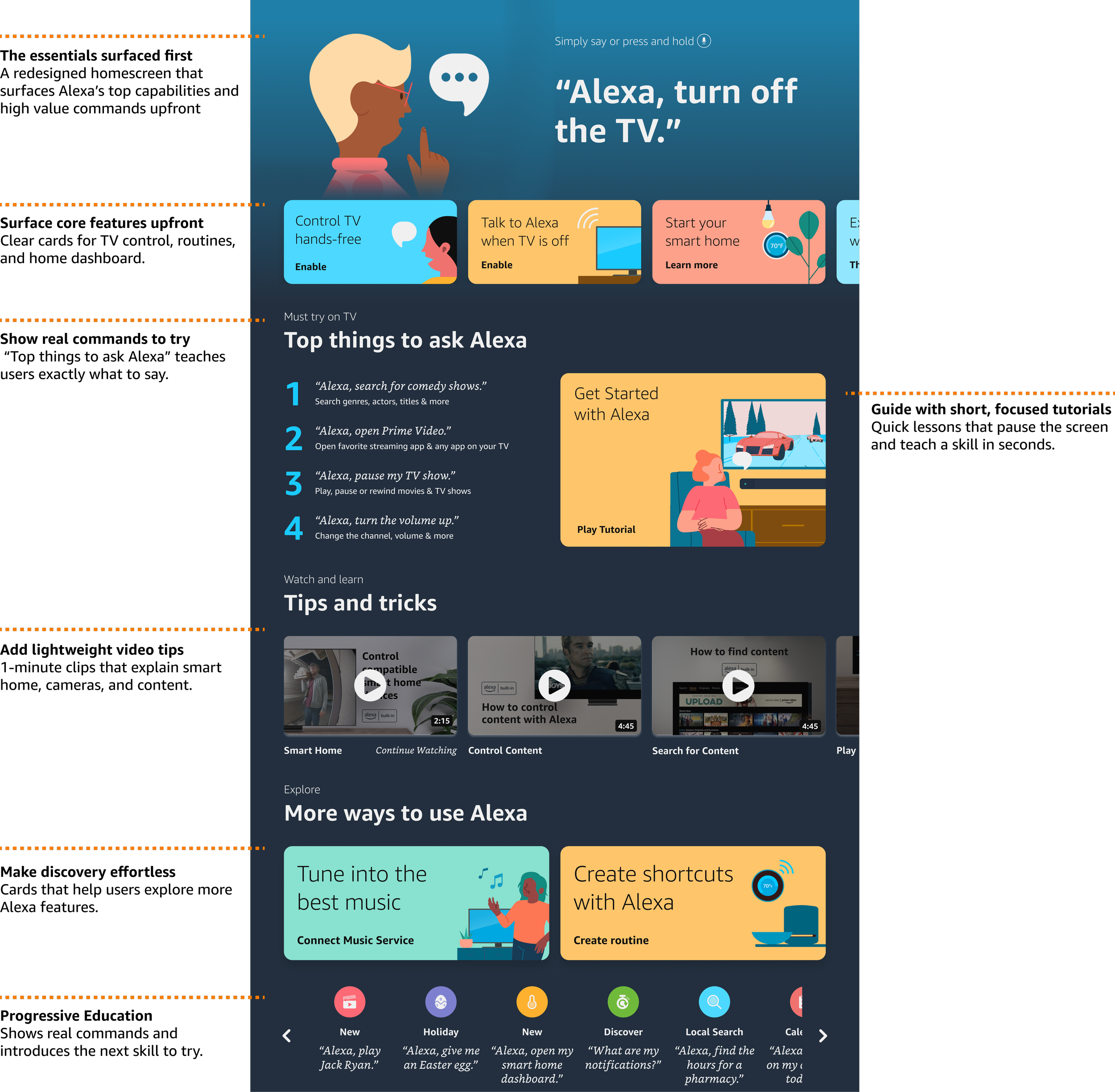
Turn Alexa education into simple, visual, high-value moments users understand in seconds.
Four new home screen components, each serving a distinct moment in the discovery journey and mapping directly to a stage in the framework.
Independently deployable
Each component maps to a stage in the discovery framework. New content drops into the right component without touching the others, the system scales as Alexa adds new features.
IMPACT
100,000+ interactions in the first 3 weeks.
Within three weeks of launching on Samsung TVs, new customers experienced the new home screen and generated 100,000+ in-app interactions. This validated that contextual, modular discovery drove engagement the old static experience couldn't.
The launch established the foundation for expanding to additional TV operators in 2024 and created the infrastructure for future personalization and ad placements.
REFLECTION
The best onboarding doesn't feel like onboarding.
The moments that drove the most engagement were the ones that felt like a natural part of using the TV and not a tutorial. Meeting users in their existing moments was more effective than asking them to take a detour.
Infrastructure decisions compound over time.
Building a framework rather than a fixed experience meant every new Alexa feature had a clear home. The upfront investment in modularity kept paying as the system expanded to new devices and content types.
I'd build in usability testing earlier.
We moved quickly to hit the launch window and addressed several friction points in fast-follow iterations post-launch. A round of usability testing before final designs would have caught those issues sooner.