
A M A ZO N A L E X A · 2 0 2 2 – 2 0 2 3
Reimagining Alexa Discovery on Smart TVs
Alexa was built into millions of smart TVs,
which sounds like a win until you look at what happened after setup. People registered, and then most of them never came back. It wasn't that they didn't want to — nothing on the screen told them what the TV could do that the Echo on the shelf couldn't.
I picked this up at the content strategy stage and stayed with it through launch.
The old screen listed what Alexa could do. It didn't help anyone getting started.
OUTCOMES
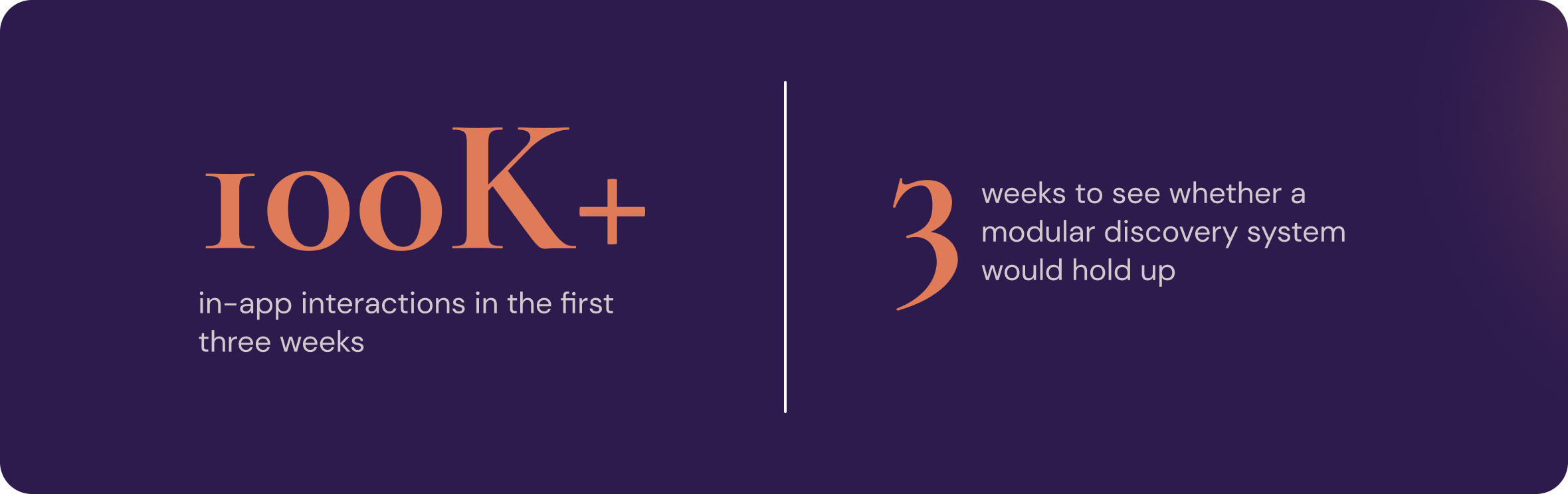
100K+ interactions in the first 3 weeks · the content framework personalization and ad placement sit on now
ROLE
Lead Product Designer — with PM, Marketing, Engineering, Business Analytics
CRAFT
Design across voice and screen · discovery framework · content strategy
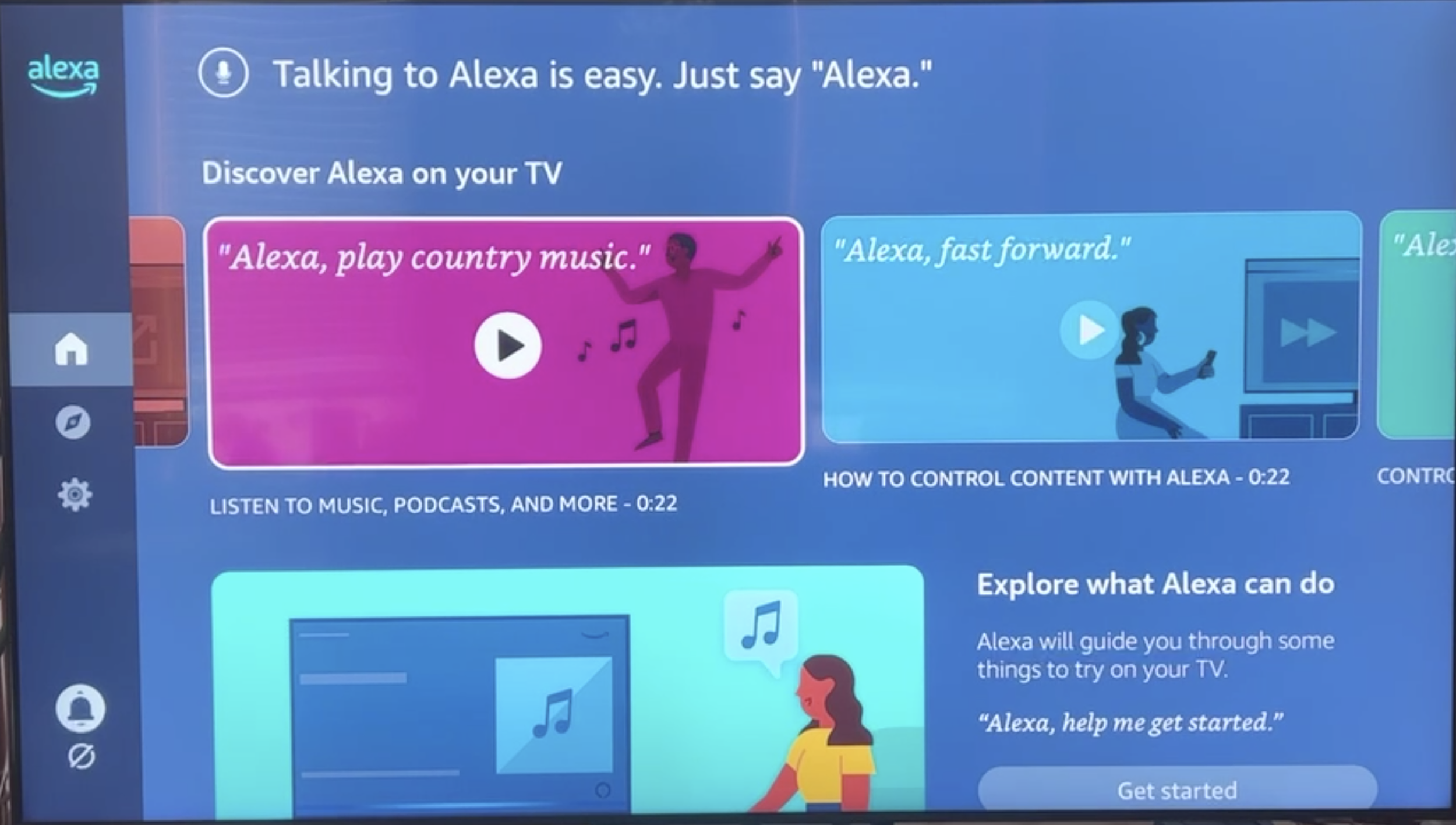
B E F O R E
Four reasons nobody came back
01
"How do I even get to it?"
Users didn't know how to access Alexa on their TV — no visible entry point they could recall.
02
"I already have an Echo."
No understanding of what Alexa on the TV did that the Echo on the shelf couldn't.
03
"Is there more setup?"
Uncertainty about whether extra configuration was required stopped people before they tried.
04
"Why change what works?"
Nothing in the experience gave a reason to choose voice over a familiar remote habit.
I read through everything we already had: studies with people who'd stopped using Alexa, research with customers who never turned her on at all, and feedback our TV partners had been collecting for a while. The same four gaps kept coming up. Capability was never the problem. Nobody had a reason to try a second time.
So I stopped designing a screen and started designing where things go
01
04
Getting started
A hero that rotates
02
Discover
Action cards
03
Explore
A feed of things to say
Habit forming
Setup guides for music and smart home
Every stage had rules. That's why new features didn't need a redesign.
I built a four-stage content framework based on how far along someone was with Alexa, from their first visit to using her without thinking about it. The stages weren't feature buckets — they were the distance between trying something once and doing it every day. Each stage got its own content types and rules for where that content lives, across three surfaces. Anything we shipped later already had a home, and teams could add to the right stage without pulling the whole screen apart.
That's the part I'm most glad we did. Personalization and ad placement both run on that framework now, and neither one was on the roadmap when we built it.
Four pieces, and what each one is for
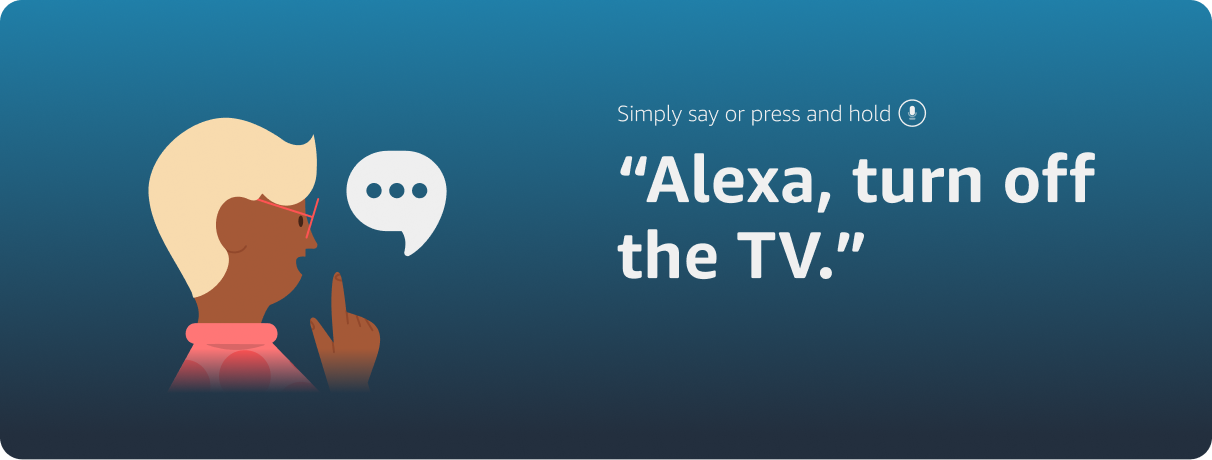

HERO ROTATOR
A hero that rotates, so there's something new to try every time you land on the screen. It gives people something to say before they've built any habit.
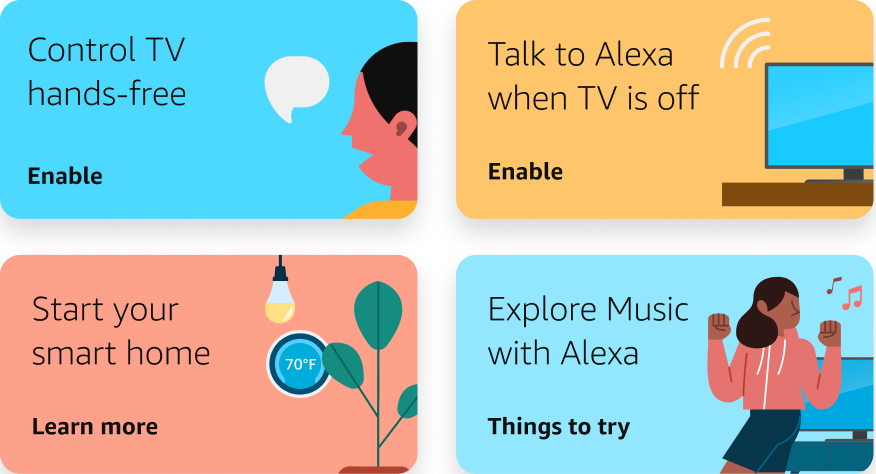
ACTION CARDS
Cards that get you into Alexa's best features in one press, with no menus to dig through.
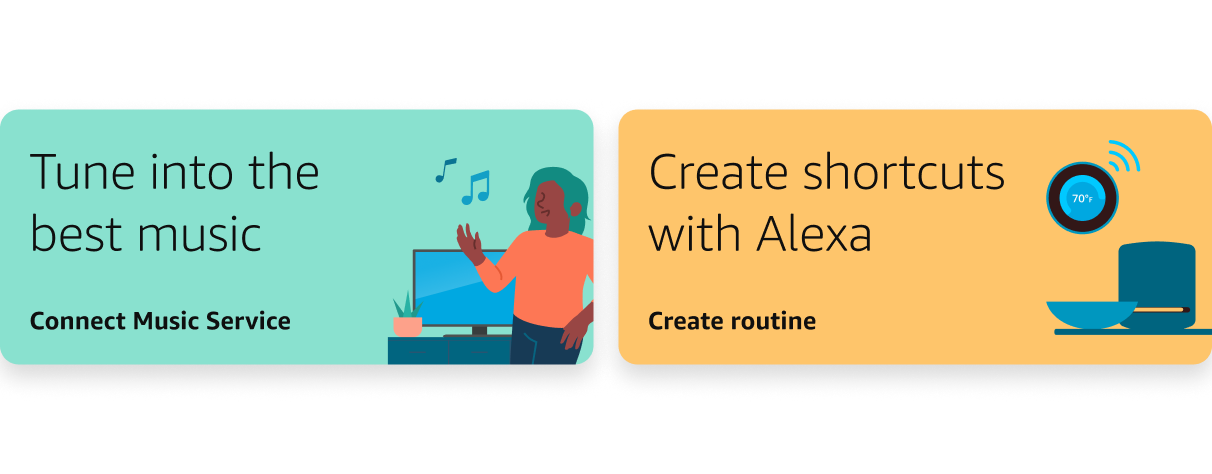
EXPLORE FEED AND SETUP GUIDES
A feed of real phrases you can actually say, different on every visit, plus proper guided setup for the things a card can't walk you through, like linking your music or getting your lights connected.
Each piece shipped on its own. The framework was the real deliverable.
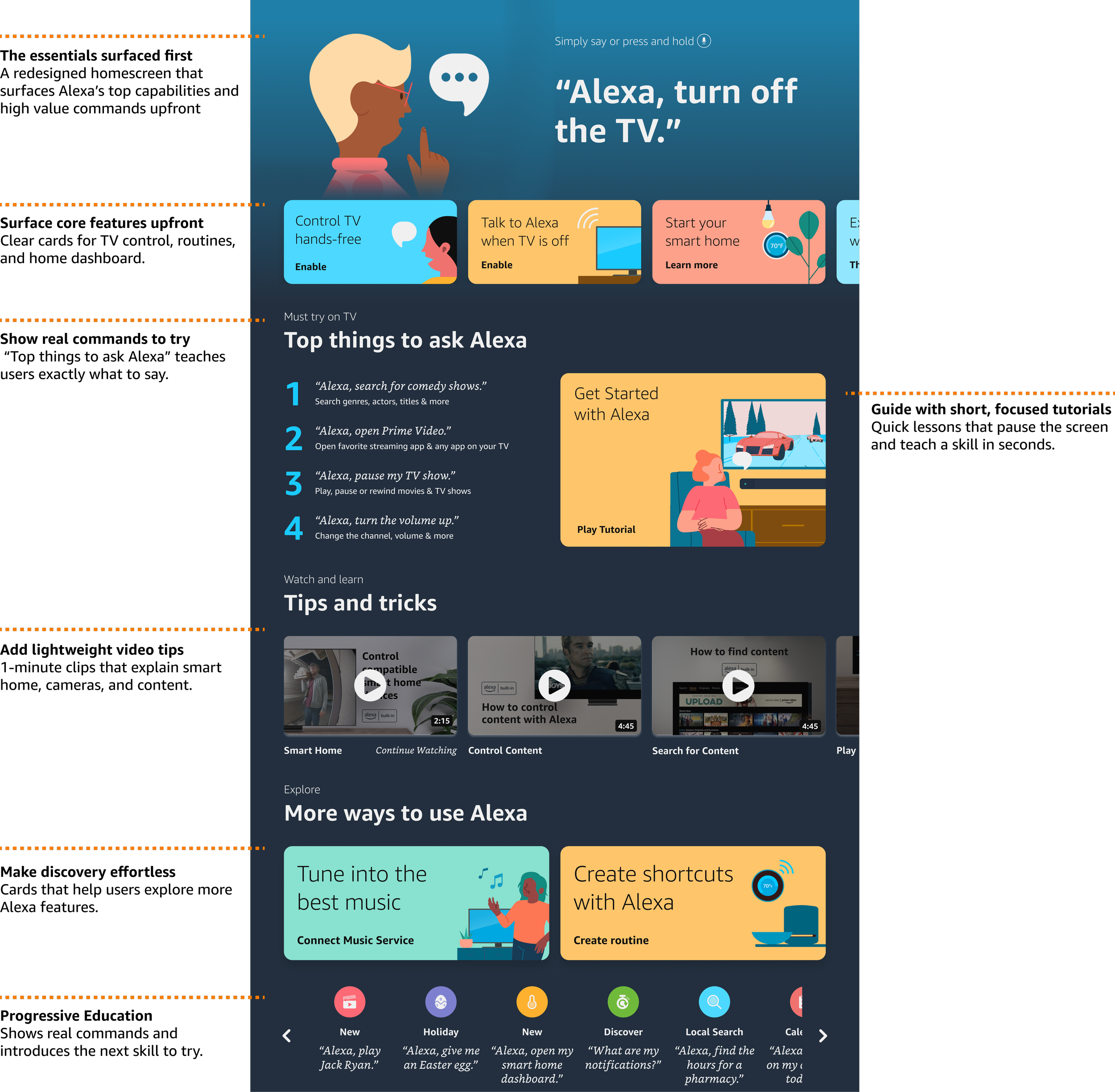
Everything working together. Each piece handles a different moment, and each one could ship on its own schedule.
Good onboarding doesn't announce itself.
The things that actually got used were the ones that felt like part of watching TV. A tutorial asks you to step out of what you're doing, and the rotator was just already there.
Building the structure mattered more than building the screen.
Every feature that came after had somewhere obvious to go, which is why the framework outlasted the design I made for it — and why the habit stage kept working after the launch content was gone.