
Amazon Alexa Enterprise • 2023
Personalized Alexa,
Anywhere You Stay
Lead Product Designer , 2022 - 2024
PMs · Engineering · Legal · Research
Interaction Design · Trust & Privacy Design · Conversational UX
TLDR;
As lead designer, I owned the end-to-end design of Personal Account Linking. This feature lets hotel guests and senior living residents connect their personal Amazon accounts to in-room Alexa devices. The challenge was designing a consumer-grade personalized experience inside an enterprise-controlled environment, on a shared device, without compromising privacy.
I led two research studies, designed the full linking and unlinking flow, rewrote the permissions screen with Legal, and validated the experience before launch. The feature launched in senior living communities in Japan and EU with plans to expand to the US and Spain after the Alexa+ launch.
CHALLENGE
Alexa in hospitality and senior living was useful but it wasn't personal.
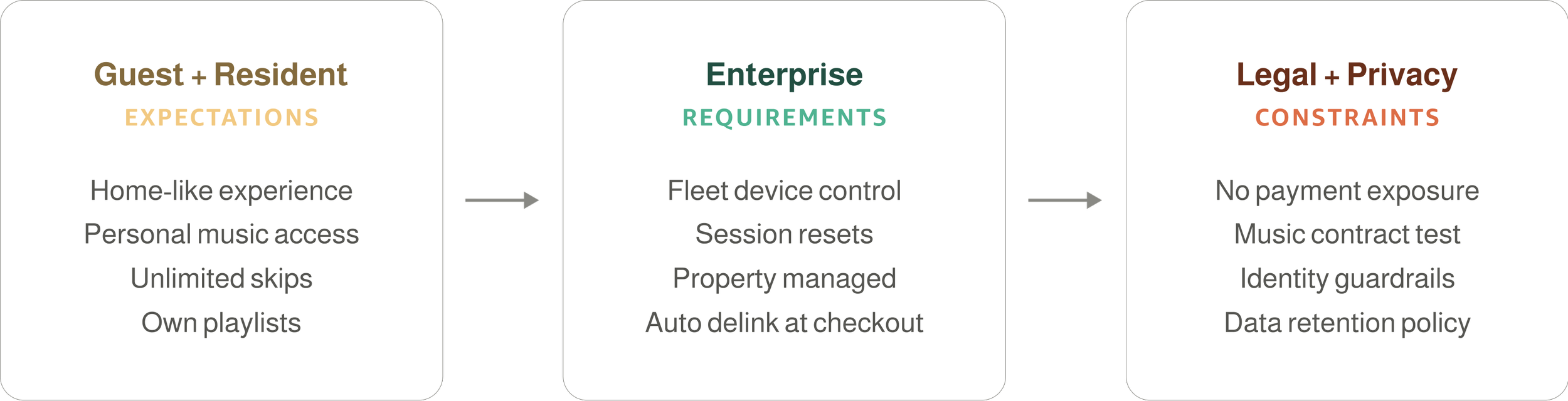
Enterprise Alexa devices were limited to licensed radio stations. Guests and residents couldn't play their own music or access subscriptions they already paid for at home. The underlying system was equally fragile and dependent on third-party licensing agreements that could expire at any time, requiring the team to reactively remap configurations across all affected regions.
Personal account linking solved both problems: give guests and residents access to their own Amazon accounts, and eliminate the dependency on third-party licensing entirely.
RESEARCH STUDY 1
I validated demand and identified the barriers before designing.
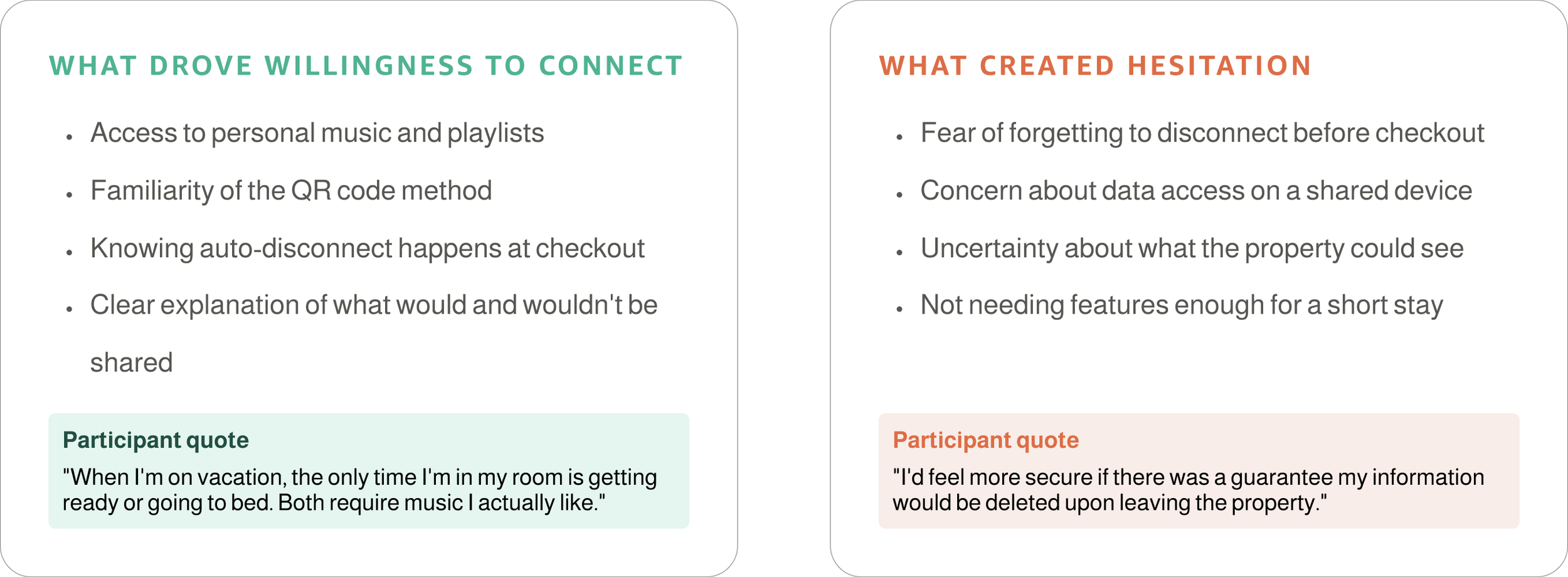
Before committing to a direction, I led a 200-participant study to understand what would motivate guests and residents to connect and what would stop them. The strongest motivator was personal entertainment. The strongest barrier was privacy concern on a shared device, specifically fear of forgetting to disconnect before checkout.
Three findings shaped the design:
Privacy had to be upfront, not buried.
95.8% found the QR code method easy because it matched patterns they already knew.
87.5% wanted explicit assurance that disconnection was automatic so control was non-negotiable.
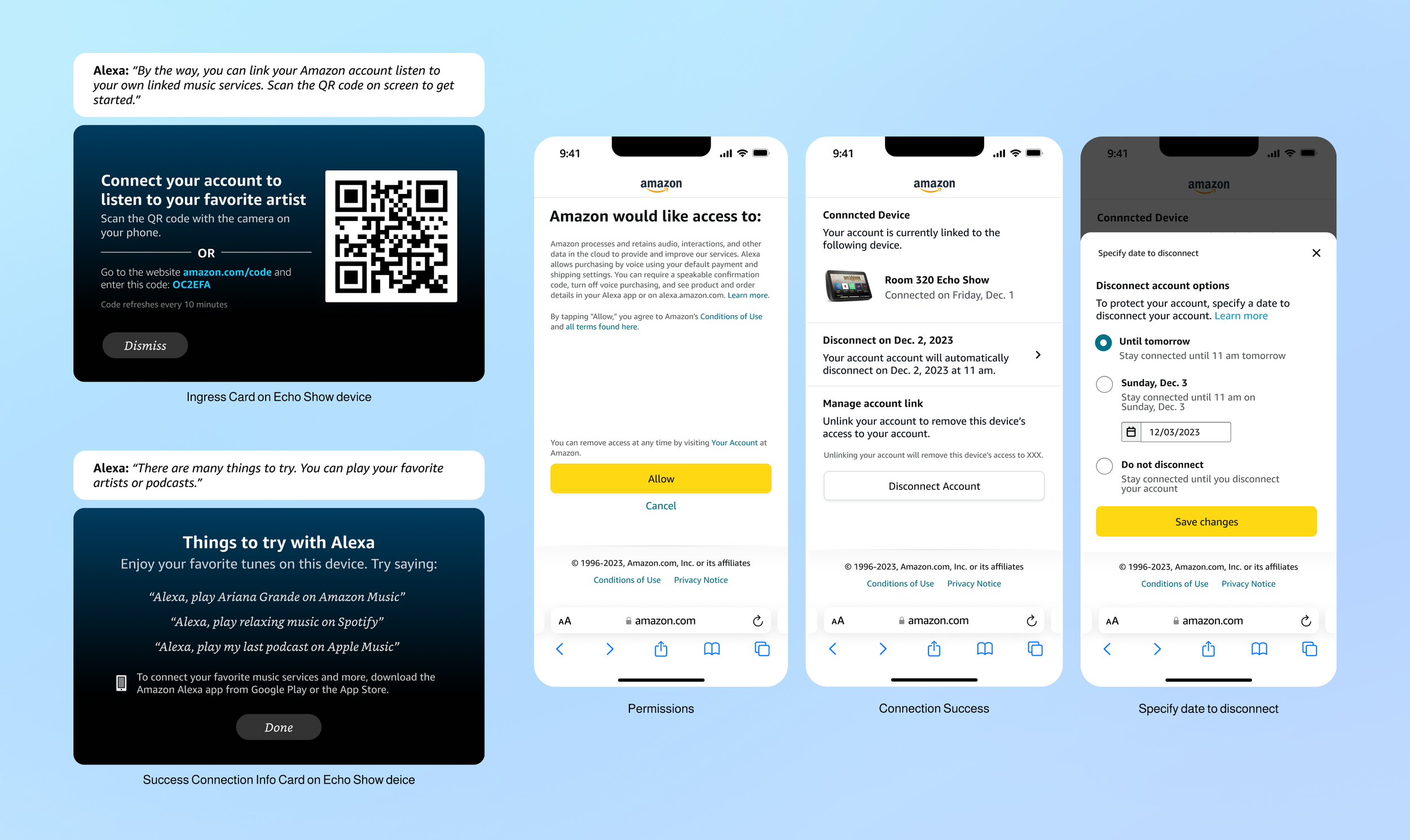
Explorations
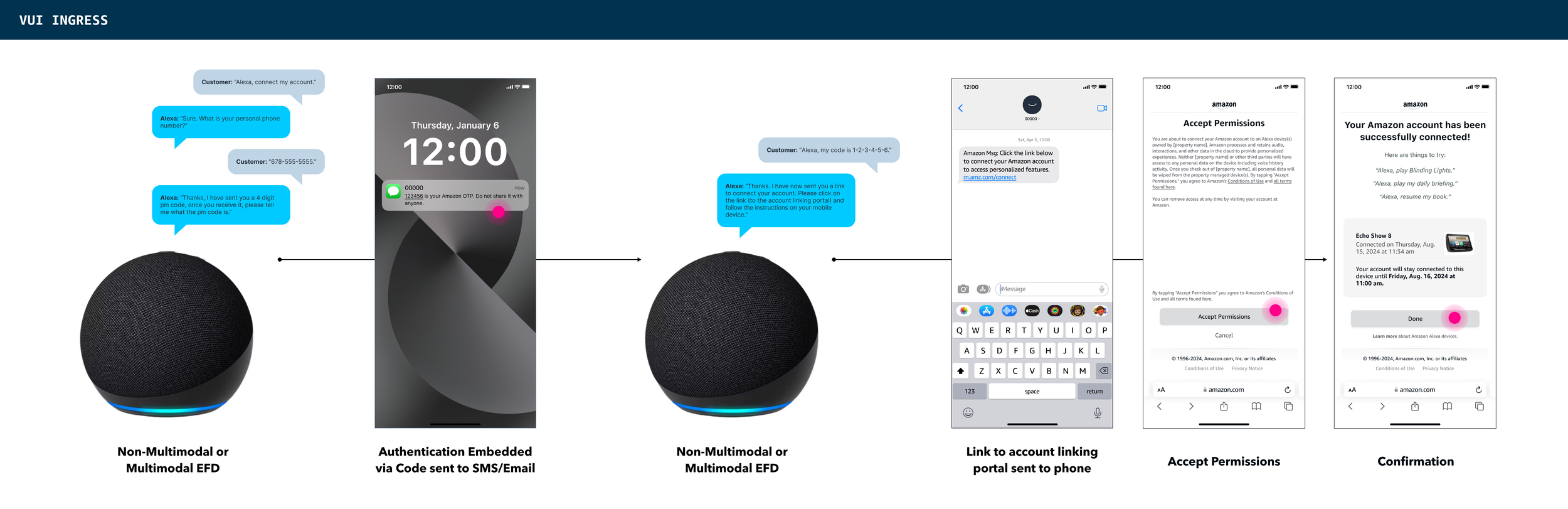
Connecting an account via voice
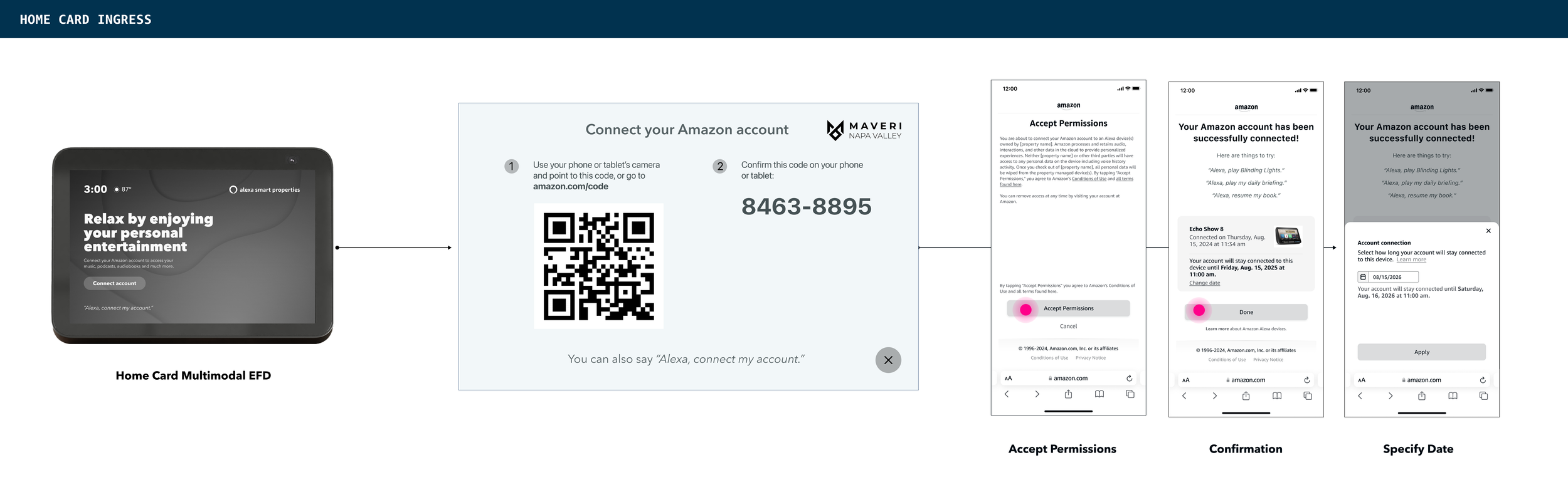
Connecting an account via Echo show device
Explorations used in first research study
STRATEGIC DECISION
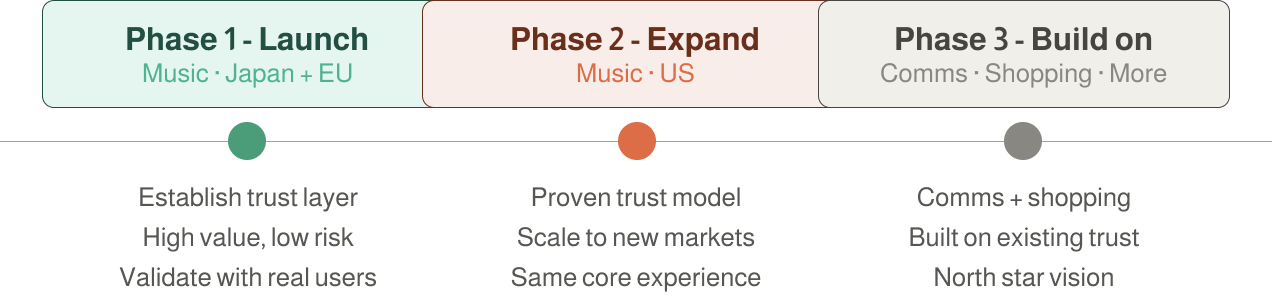
The right first move wasn't more features. It was earning trust.
Early discussions included expanding to communications, shopping, and smart home at launch. My product partner and I recommended against it. Research showed users were already cautious about privacy on a shared device, two domains were undergoing AI-related overhauls with unresolved data handling questions, and the trust bar would have been too high for a first launch.
We recommended launching music first to establish trust before adding more sensitive capabilities. This required alignment from domain expert stakeholders and leadership. The research data made the case.
DESIGN PRINCIPLES
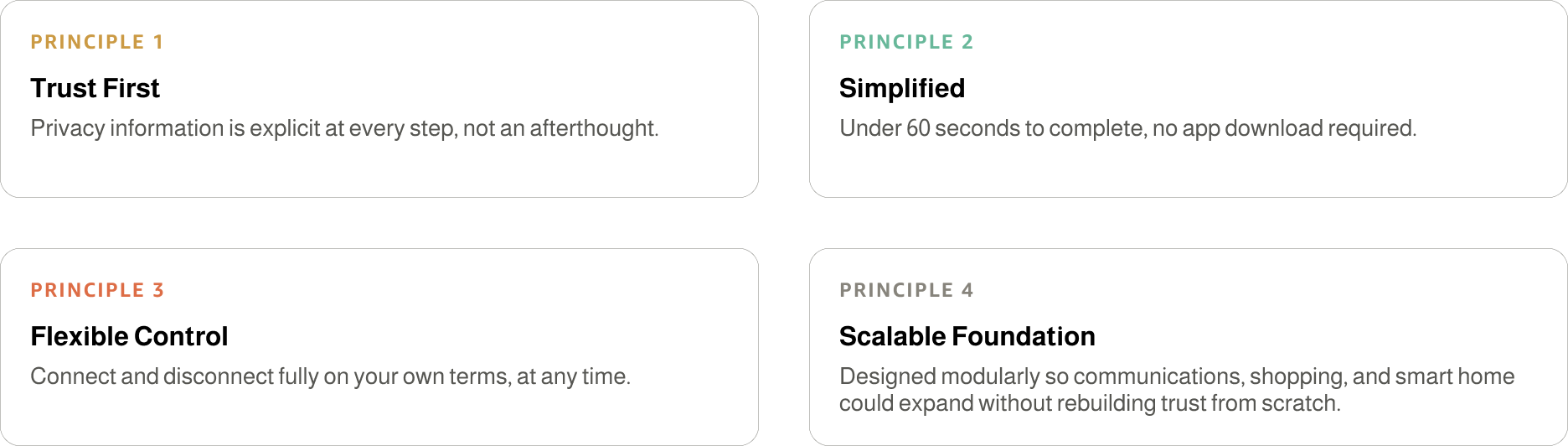
Four principles guided every decision.
Before designing any screen, I defined four principles that served as guardrails throughout the project:
THE LINKING FLOW
I designed the flow around the moment of highest hesitation.
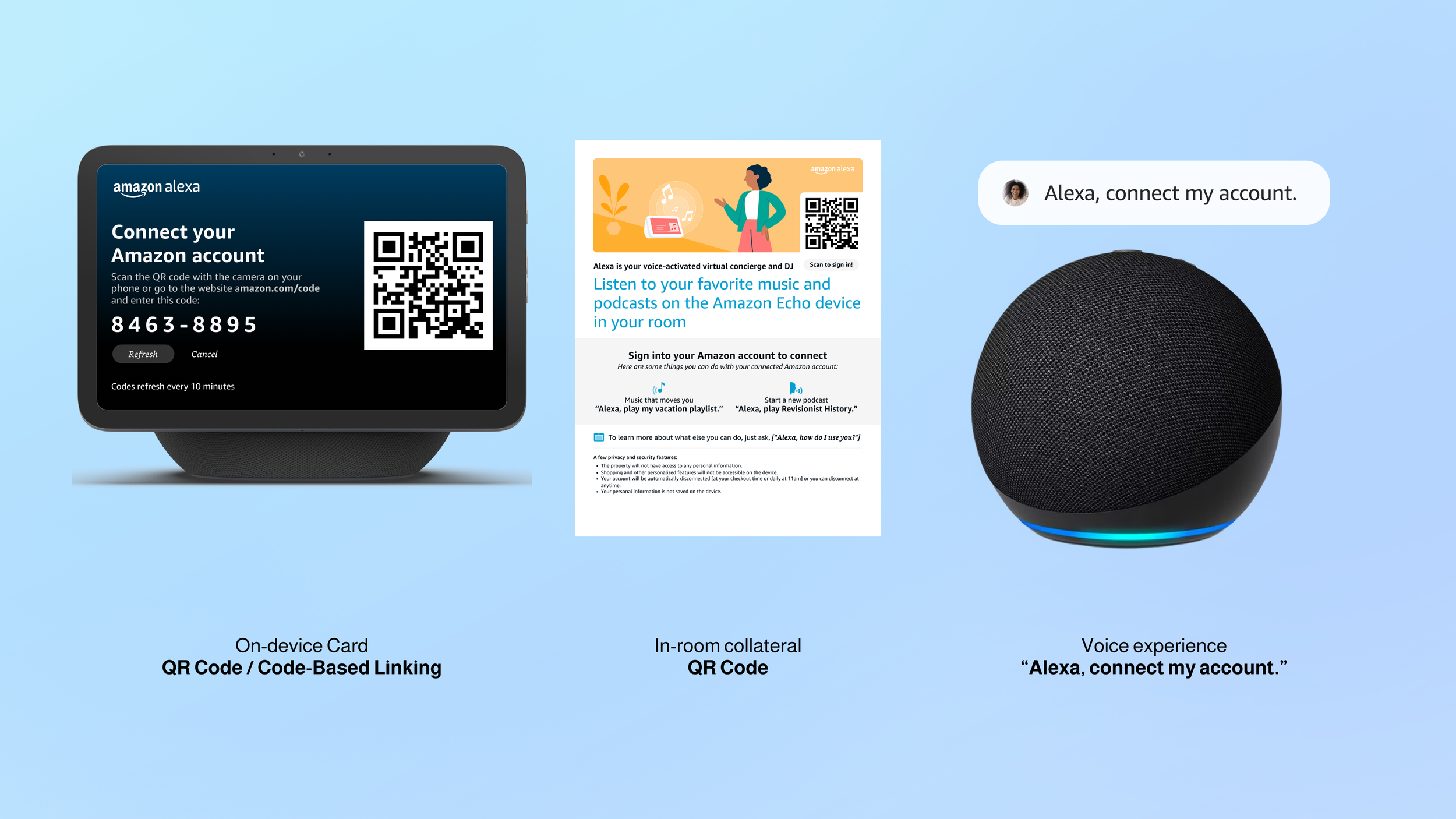
Three entry points existed for different user behaviors: on-device rotating card, voice trigger, and in-room printed collateral.
The QR code became the primary entry point which was validated in research as faster than Bluetooth pairing and more familiar than typing a URL. Codes refreshed every 10 minutes, a deliberate security decision to prevent stale sessions.
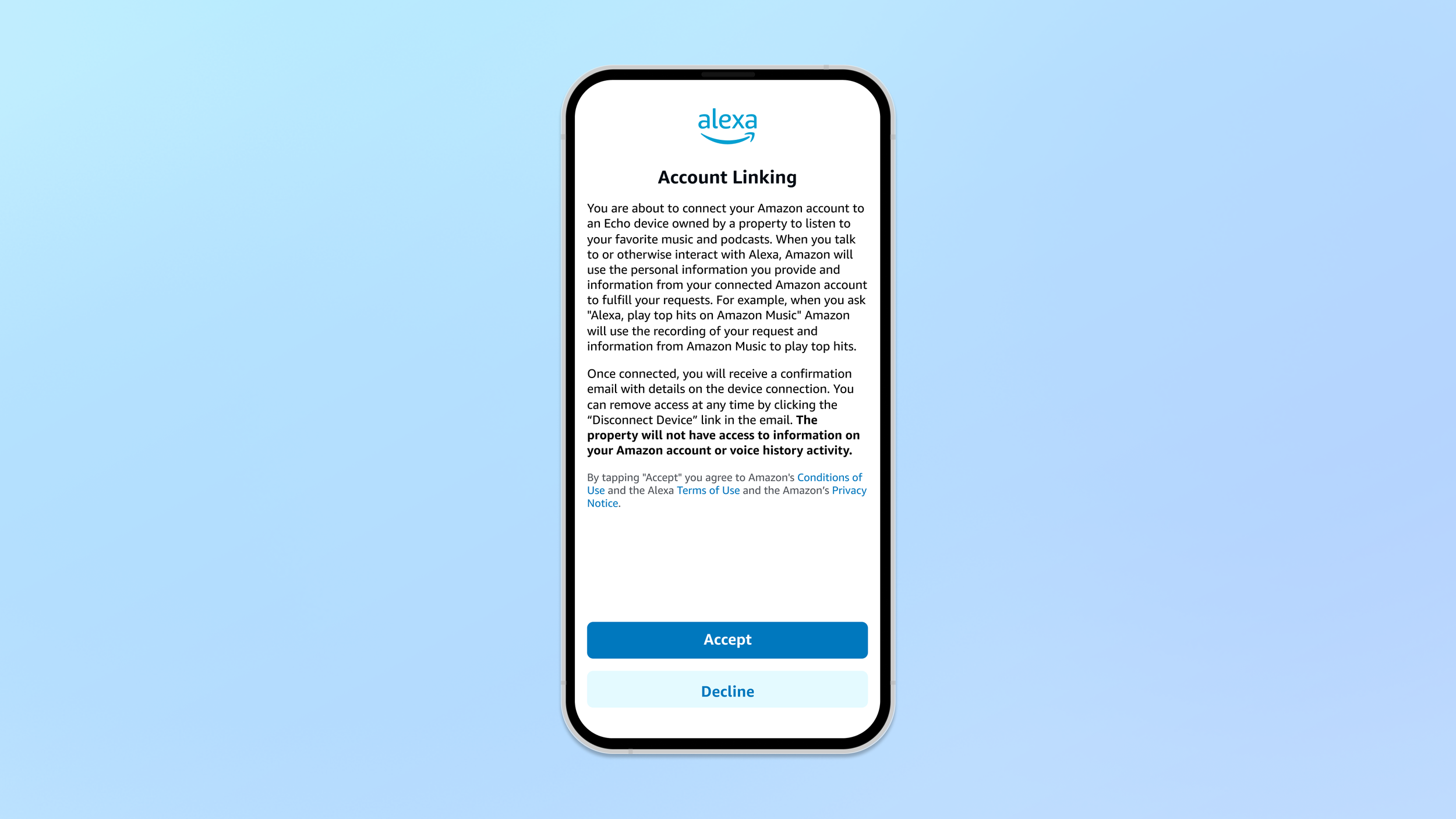
The permissions screen was the most critical moment in the flow. I worked with Legal to rewrite it making explicit what was shared, what wasn't, and that the property had no access to account or voice history.
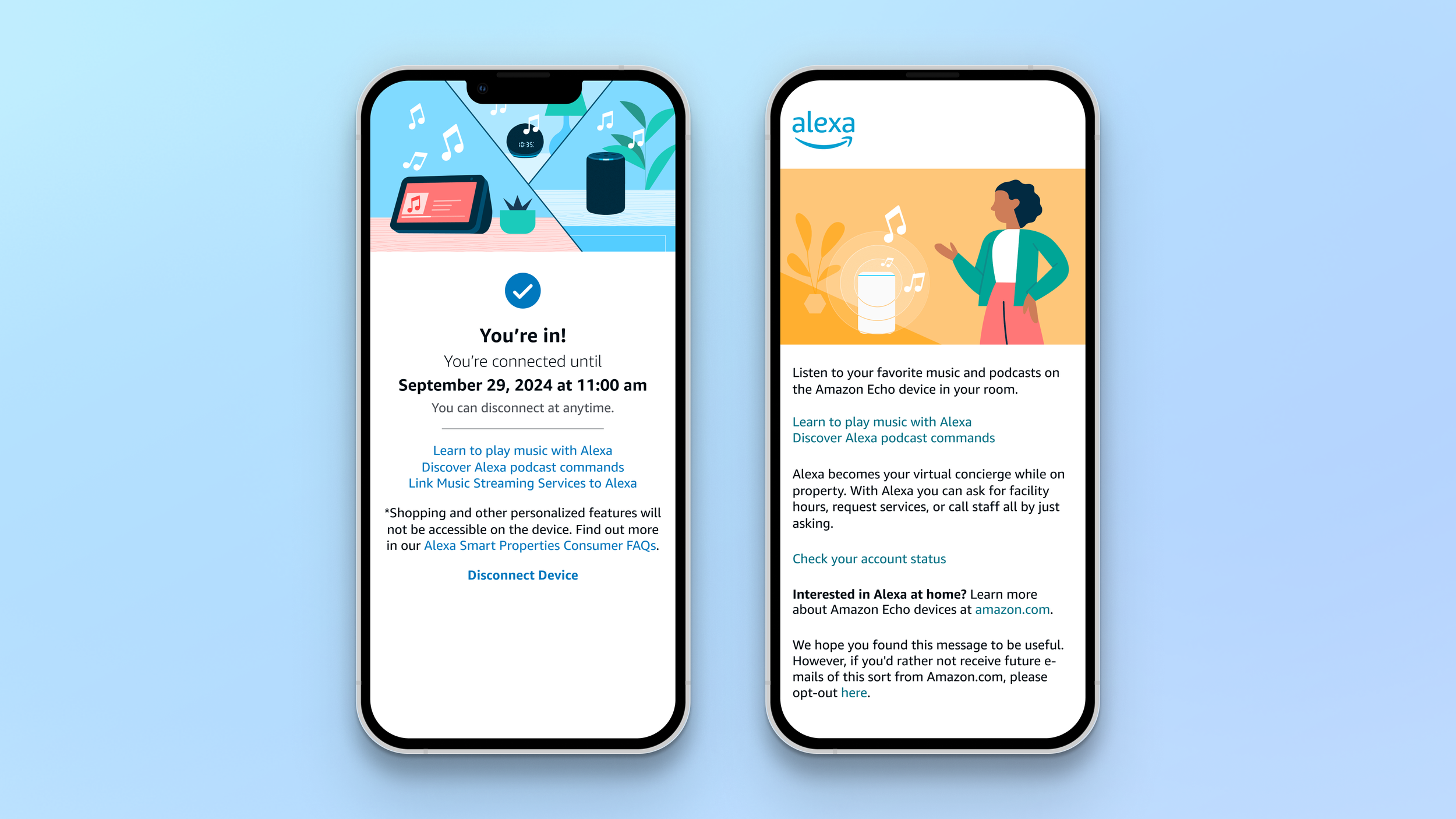
The success screen led with the one thing users cared most about: the exact date and time their account would automatically disconnect. Accounts disconnected daily in hospitality and annually in senior living with manual disconnect always available from the screen, from the confirmation email, and from a web portal.
RESEARCH STUDY 2
Before launch, I validated the experience was ready to ship.
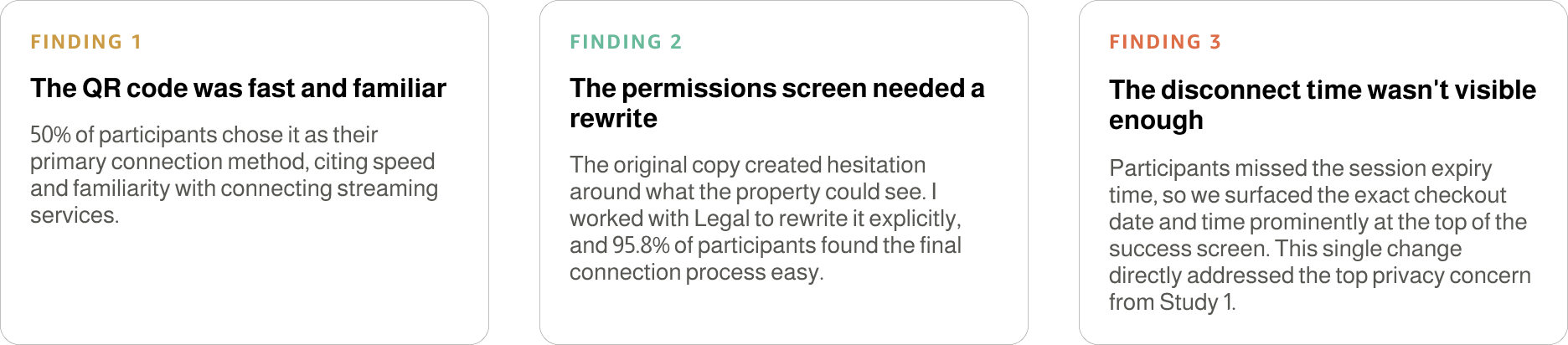
I ran a second 24-participant usability study validating QR clarity, permissions comprehension, and disconnect confidence. Three refinements came out of it:
WHAT SHIPPED
A guest asks for Hamilton. They get Hamilton, not a radio station.
The final flow:
Scan → Sign in → Review permissions → Confirm
Auto-disconnection at checkout removed the anxiety of having to remember.
IMPACT
The feature launched in Japan and the EU, with expansion underway to the US and Spain.
Engagement among linked devices was meaningfully higher than non-linked devices. This validated that personalization drove active daily usage, not just initial setup. Personal account linking also resolved the operational fragility that had required the team to reactively manage third-party licensing across regions.
The trust layer it established became the foundation for expanding into communications, shopping, and smart home personalization.
REFLECTION
Designing for trust is designing for adoption.
Every moment of hesitation in a linking flow is a potential drop-off. The permissions screen rewrite with Legal produced a better, more honest experience than we would have shipped without that friction.
The offboarding deserved as much attention as the onboarding.
We invested heavily in the connection flow. In retrospect, the disconnection moment, the one that determines whether someone ever links again on their next stay deserved the same intentionality. A guest who disconnects feeling confident is a guest who connects again at the next property. That's the loop we underdesigned.